Measuring your energy performance to mitigate the threat of cost pressures and regulations

Sustainability is a broad topic with deep engagement in a variety of industries, though it is a relatively new conversation in cannabis. That said, in today’s rapidly scaling and globalizing market, intelligent cannabis investors and operators are beginning to contemplate how sustainability can add value to their ventures.

Personally, after two decades of sustainability experience in a variety of industries, I prefer the term “resource efficiency” over sustainability because it is more clear and ties directly to the bottom line.

With impeccable timing given the state of today’s competitive market, Arcview hosted the first major cannabis investor discussion on sustainability a few weeks ago in San Francisco. I was honored to speak alongside Emily Paxhia of Poseidon, Frederick Schilling of Klersun and Francis Priznar of Arcview.

The Arcview speakers borrowed from their experiences in other sectors as they laid out the reasons why sustainability—or resource efficiency—matters in cannabis:

  • Mitigating cost pressures through improving the efficiency of operations
  • Enabling brand differentiation in a crowded marketplace
  • Protecting the industry’s reputation (i.e., ensuring the entire sector is not tarnished by the image of inefficient indoor energy hogs that disrupt electricity grids)
  • Attracting investor interest
  • Enhancing valuation
  • Getting ahead of oncoming regulations on natural resource use (Massachusetts recently mandated use of LED lighting in indoor grows and California will soon be writing its rules setting targets on efficiency and renewables.)

One question from the audience, while seemingly simple, was particularly insightful and generated an inspired response from the panel. “How do you get started on a sustainability journey?”

The responses essentially advised:

  1. Evaluate your business activities
  2. Take an inventory of your natural resource impacts
  3. Dive into the process of determining how to reduce one of your significant line items
  4. Take the savings you mined and plow them into additional profit-maximizing activities

Energy expenses generally range from 25 to 50 percent of an overall cost structure of a cultivation operation that incorporates controlled environments (indoor or greenhouse). I recommend starting there. We at the non-profit Resource Innovation Institute created a free, peer-reviewed energy benchmarking tool called the Cannabis PowerScore to point the way to an efficient industry future.

More than 100 cultivation facility operators have contributed data about their energy consumption, technology use and production output. In return, they receive an instant benchmark that compares their energy performance to their peers, while identifying operational weak points and resources to drive energy savings. All farm-identifiable data is kept confidential.

Resource Innovation Institute then uses the aggregate, anonymous data to inform governments, utilities and manufacturers how to shape policies, incentives and R&D to drive conservation and establish industry standards. In essence, we are playing a role much like the federal government does with the Energy Star label.

It’s critical that industry leaders take an initial step toward sustainability not just for their own benefit, but also to enable the industry to establish baselines and figure out the most efficient pathways forward so that geographies know how to compete in the global marketplace. We need to move away from our history of secrecy and elevate crowdsourced best practices.

We can only do this through objective analysis of data. After all, literally no one knows with a significant level of confidence how to optimize efficient techniques and technologies across a range of cultivation settings and climate zones. For example, running an efficient operation in Arizona is vastly different than doing so in Massachusetts.

Last week, we announced that RII will produce a Cannabis Energy Report in partnership with New Frontier Data and Scale Microgrid Solutions. This groundbreaking report will be the definitive guide to support investors, operators, policymakers and others to make decisions on how best to create a profitable, resource efficient future for cannabis. The analysis will be based on the crowdsourced Cannabis PowerScore data.

Start your sustainability journey and get your instant energy performance benchmark by encouraging one of your team members to invest a few minutes engaging with the Cannabis PowerScore. If you participate by August 31, your data will be incorporated into the analysis for the Cannabis Energy Report and will give you the best understanding of how competitive your facility is.

With your valuable input, we can simultaneously chart the best course for industry efficiency and help boost your bottom line.


This article was originally published,

at  http://www.mjbizdaily.com


Solar Industry and Illinois Farm Bureau collaborate to guarantee tax revenue for rural communities and protect farmland

New law will protect farmland and help ensure $250-350 million in tax revenue for rural Illinois.

The collaboration of solar electricity and agriculture is nothing new but what is new is how states like Illinois are embracing the opportunity to integrate two industries agriculture (old economy) and solar power (new economy) together in order to help each of them grow together. This is intelligent governing policy that should be implemented in other states that need economic stimulus for rural and agricultural communities.

Governor Rauner has signed two bills that will help ensure solar development benefits farmers and rural communities in Illinois.  The state’s solar industry worked with the Illinois Farm Bureau, local authorities and other stakeholders to shape SB 486, which creates a standard tax assessment value for solar farms in Illinois, and SB 2591, which sets standards for the construction and deconstruction of solar farms on agricultural land. The Illinois House and Senate passed both bills unanimously and Governor Rauner signed the final piece of legislation on August 10th.

The solar property tax legislation (SB 486) sets a standard tax assessment value for large solar installations, creating certainty around the property tax revenue that solar farms will pay to local taxing bodies, helping to fund schools, roads and other critical services. Under the legislation, each megawatt (MW) of ground-mounted solar installed in Illinois will generate an average of $6,000$8,000 per year in property tax revenue. The industry expects to install up to 2,000 MW of ground-mounted solar farms by 2021, which will create a total $250$350 million in property tax revenue over a 25-year lifespan. Under Illinois’ funding formula, approximately 70% of this revenue will be dedicated to funding schools.

“Solar energy is a rapidly growing industry in Illinois, and it’s good not only for the environment but also for the economy,” said Illinois Senator Don Harmon (D-Oak Park), sponsor of SB 486. “It is my hope that the revenue generated from this industry can benefit local schools and communities and encourage the continued growth of solar power in our state.”

“Solar businesses are ready and willing to create new jobs, clean energy and tax revenue to support Illinois communities. This bill provides a framework for us to move forward,” said Lesley McCain, executive director of the Illinois Solar Energy Association. “The solar industry was proud to work with the Farm Bureau, county tax assessors and school districts to develop smart solar legislation that benefits all Illinoisans.”


The solar industry worked in partnership with Environmental Law & Policy Center and other advocates to support smart solar policy in Illinois.

“ELPC has helped drive clean energy development in Illinois, and we are pleased that Governor Rauner has signed the solar energy legislation that the General Assembly passed this spring,” said Howard Learner, Executive Director of the Environmental Law & Policy Center.  “The stage is set even better to accelerate solar energy development that is good for job creation and good for a cleaner energy future in Illinois.”

The farmland legislation (SB 2591) ensures that solar farms can coexist with agriculture in Illinois while providing long-term benefits to soil and water quality. SB 2591 requires that solar developers enter into an Agricultural Impact Mitigation Agreement (AIMA) with the Illinois Department of Agriculture prior to solar farm construction. The AIMA will set standards for solar construction and deconstruction and require financial assurances from developers that land will be restored to its prior use at the end of a solar farm’s life.

Governor Rauner signed SB 486 on August 10th and SB 2591 on June 29th. These bills will help Illinois reach its statewide goal of 25 percent renewable energy by 2025 while also driving economic development, new jobs and reducing pollution from electric generation.

The Illinois Solar Energy Association (ISEA) is a non-profit organization that promotes the widespread application of solar and other forms of renewable energy through our mission of education and advocacy. ISEA is the state resource for renewable energy related policy developments, educational classes, events and access to local renewable energy businesses. www.illinoissolar.org

This article was originally published in https://pv-magazine-usa.com on 

Solar Owners Must Have The Correct Tax Appetite To Match Their Solar Energy Credits

tax credits

One of the major reasons taxpayers are drawn to business opportunities in the solar
space are the benefits provided by solar energy tax credits. Although solar tax credits are substantial, taxpayers might not reap the full benefits unless the taxpayers have the correct tax appetite. Solar tax credits are subject to the passive loss rules under the Internal Revenue Code, which means taxpayers can only use solar tax credits to offset passive income unless the taxpayers can demonstrate material participation in the trade or business.

When solar energy property is placed in service, the taxpayers who own such property are eligible for solar tax credits. The amount of the solar tax credits is a percentage of the qualified basis of such solar property. In the case of solar property, the construction of which begins on or before Dec. 31, 2019, the solar tax credit is equal to 30% of the qualified basis of such solar property. For solar property, the construction of which begins after Dec. 31, 2019, and before Jan. 1, 2021, the solar tax credit is equal to 26% of the qualified basis of such solar property. For solar property, the construction of which begins after Dec. 31, 2020, and before Jan. 1, 2022, the solar tax credit is equal to 22% of the qualified basis of such solar property. For solar property, the construction of which begins after Dec. 31, 2021, the solar tax credit is equal to 10% of the qualified basis of such solar property.

Notwithstanding the forgoing, there will be no solar tax credit for residential solar property, the construction of which begins after Dec. 31, 2021, which is owned by the owner of the home. The solar tax credit will remain at 10% for residential solar property owned by a third party through a power purchase agreement.

Advertisement Soltec

Solar tax credits are subject to the passive loss rules under Code Section 469 and its regulations. “Passive activity” is defined as any activity involving the conduct of any trade or business in which the taxpayer does not materially participate. As a result, solar tax credits can only be used to offset tax liability attributable to passive income unless the taxpayer can demonstrate material participation by satisfying one of the seven material participation tests set forth in the tax regulations. “Material participation” means involvement in the operations of an activity that is “regular, continuous, and substantial.”

The seven material participation tests set forth in the regulations are as follows:

(1) Hourly safe harbor: The taxpayer participates in an activity for more than 500 hours during the current taxable year.

(2) Primary participant: The taxpayer’s participation in the activity for the current taxable year constitutes substantially all of the participation of all individuals in the activity (including individuals who are not owners of interest in the activity). As such, under Test 2, only one of the principals can satisfy the material participation test. In order for the taxpayer to satisfy Test 2, the taxpayer cannot have employees or non-employees performing most of the work. Discrete tasks, such as appropriate delegation of maintenance and servicing of solar property, or the performance of ministerial tasks, would not defeat the taxpayer’s ability to meet Test 2 so long as the taxpayer remains the primary participant and can demonstrate material participation in the trade or business. Although there is no hourly requirement to meet Test 2, the Internal Revenue Service (IRS) generally looks to see at least 100 hours of material participation from the taxpayer.

(3) Maximum participant: A taxpayer participates in the activity for more than 100 hours during the current taxable year, and such participation is not less than the participation in the activity of any other individual (including individuals who are not owners of interests in the activity). As such, if there are multiple active principals in a company owning solar property, while satisfying the 100-plus-hour requirement under Test 3, each active principal cannot participate less than anyone else, including the other active principals. There would have to be an equal division of activity across all of the active principals, at a minimum of 100-plus hours each.

(4) Significant participation activity aggregation: The activity is a significant participation activity (SPA), and the taxpayer’s aggregate participation in all SPAs during the current taxable year exceeds 500 hours. An SPA is generally an activity in which the taxpayer participates for more than 100 hours during the current taxable year but by itself does not qualify as a material participation activity otherwise.

(5) Historical participation: The taxpayer materially participated in the activity for any five years (whether or not consecutive) during the 10 years immediately preceding the current taxable year.

(6) Personal service activity: The taxpayer materially participated in a personal service activity related to the solar property (professions or trades in which capital is not an income-producing factor) for any three years (whether or not consecutive) preceding the current taxable year.

(7) Facts and circumstances: The taxpayer does not meet material participation Tests 1-6, but based on all of the facts and circumstances, the taxpayer participates in the activity on a regular, continuous and substantial basis during the taxable year. The taxpayer must participate in the activity for at least 100 hours a year under this test. Time spent managing the activity will not count towards the 100-plus hours if any individual other than the taxpayer receives compensation for managing the activity, or if another person spent more hours than the taxpayer managing the activity.

A taxpayer’s participation in an activity may be established by “any reasonable means.” These means may include “contemporaneous daily reports, logs or similar documents,” but such documents are not required if the taxpayer identifies the “services performed over a period of time and the approximate number of hours spent performing such services … based on appointment books, calendars or narrative summaries.”

For purposes of analyzing whether a taxpayer is a material participant, it is important to distinguish between work that is customarily performed by owners, which does qualify, from participation as an investor, which does not qualify.

Examples of work performed as an investor that is not treated as material participation include “studying and reviewing financial statements or reports on operations of the activity” and “preparing or compiling summaries or analyses of the finances or operations of the activity for the individual’s own use.” Taxpayers are cautioned that if they delegate to others a significant portion of the work that is required to control and operate the business, the taxpayers’ own material participation may not be considered “regular, continuous and substantial.”

The material participation of the taxpayer is not the only factor to consider when determining whether solar tax credits can be used to offset active income. The IRS also looks at the type of business entity that owns the solar property. Specifically, the IRS has taken the position that limited partners in a limited partnership and members of a limited liability company (LLC) created under state law are presumed not to materially participate in the business entities that own the solar property.

Taxpayers often enter into a business structure that involves an LLC as the holding company of the entity that owns and operates the solar property. Taxpayers may create a holding company to serve as the sole manager/member of a single member LLC that owns, installs and manages the solar property. The Internal Revenue Code provides that unless the exceptions under the tax regulations are met, “no interest in a limited partnership as a limited partner shall be treated as an interest with respect to which a taxpayer materially participates.”

Under most state laws, an LLC member has limited liability. As a result, the IRS has historically treated LLC members like limited partners to the extent that they are presumed not to materially participate in their respective trades or businesses.

The tax regulations do provide three exceptions to the general rule under the code that limited partners (or LLC members) cannot materially participate in their trade or business. The three exceptions to the general rule are when the limited partner (or LLC member) is found to meet material participation Test 1 (500-hour safe harbor), Test 5 (historical participation) or Test 6 (personal service activity).

In contrast to the position taken by the IRS, there is a line of case law that rejects the IRS’ position that LLC members are, by virtue of the limited liability provisions of state laws, equivalent to limited partners. The courts have expanded the means by which limited partners or LLC members can demonstrate material participation by allowing such taxpayers to use any one of the seven material participation tests. Although the IRS has not formally adopted the treatment of limited partners and LLC members by the courts with respect to material participation, the prevailing view is that all seven material participation tests are applicable to limited partners and LLC members.

Taxpayers with a significant appetite for the use of passive tax credits can take full advantage of solar tax credits without consideration as to whether they are materially participating in their respective trade or business. In contrast, taxpayers with an appetite to use solar tax credits to offset active income must demonstrate material participation.

Based on the prevailing case law, it is possible for LLC members to demonstrate material participation by meeting any one of the seven material participation tests. It is recommended that both the LLC operating agreement and individual business activity of the LLC member reflect that the LLC member takes part in “controlling the business.” That way, the taxpayer will be subject to the “general partner” exception under the tax regulations.

Regardless of the type of business structure that owns the solar property, all taxpayers are recommended to consider the type of income they have to offset (passive or active) and, if necessary, whether material participation can be demonstrated in order to maximize the benefits of solar tax credits.

This article was originally published by


Solar Water Pumping Solutions in Agriculture

I’ve been getting asked more and more lately about solar power and pumping water. If you are looking for better, more sustainable cost efficient ways to irrigate your fields this may be your hot ticket. Solar powered water pumps for hemp or cannabis grows.

You can check these guys out, Grundfos who offer products that can help you pump water if you’re far off the grid or in a remote power location.

http://www.grundfos.com

Grundfos keeps lifecycle costs low for solar water supply. We were one of the first to offer an off-grid water pumping system. Today, we are a global player that leads the way developing sustainable solar water solutions.

  • Low operating costs and no energy costs – costs are known in advance
  • Favourable investment climate – solid return on investment
  • A robust system – long product life, low maintenance and manageable   service requirements
  • Advice and support to ensure delivery of the right optimised solar  water solution

Grundfos Solar Water Solutions deliver unmatched flexibility for reliable water  supply with no ongoing energy costs. From low-flow to large-scale solar-powered water supply, Grundfos has a highly optimised solar water solution that matches any application on the farm or ranch, in or around the home, and for communities in developing countries-

Airbus Zephyr Solar High Altitude Pseudo-Satellite flies for longer than any other aircraft during its successful maiden flight

  • Touch down after 25 days, 23 hours, and 57 minutes
  • System capabilities demonstrated
  • Maiden Flight objectives achieved

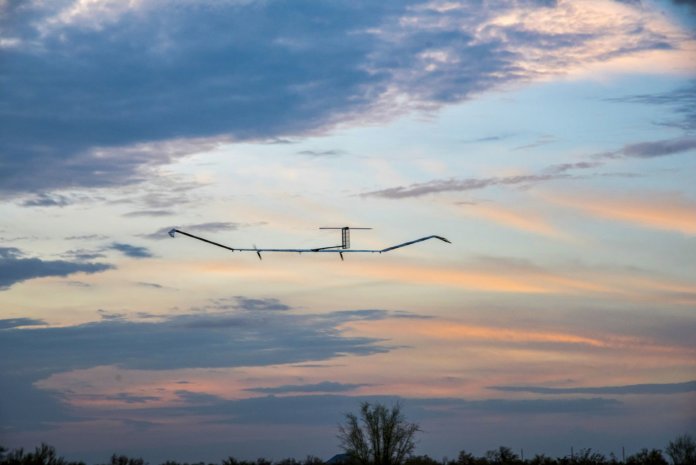
Farnborough, 8 August 2018 – Airbus Defence and Space announced the successful landing of its first production aircraft of the Zephyr programme, the new Zephyr S HAPS (High Altitude Pseudo-Satellite). After taking off on 11th July in Arizona, USA, Zephyr S logged a maiden flight of over 25 days, the longest duration flight ever made. An application has been made to establish this as a new world record. This maiden flight of the solar-powered Zephyr S proves the system capabilities and achieved all the flight’s engineering objectives.

The previous longest flight duration record was also logged by a Zephyr prototype aircraft a few years ago, achieving then more than 14 days continuous flight, which already was ten times longer than any other aircraft in the world.

This new record flight was supported by the UK government and reflects the UK Ministry of Defence’s position as the first customer for this innovative and potentially game-changing capability.

General Sir Chris Deverell, Commander UK’s Joint Forces Command, said:

“This is a great example of how JFC is at the heart of innovation for UK Defence. We are demonstrating new technology that puts our Armed forces at the cutting edge of communication and surveillance”

Zephyr is the world’s leading, solar–electric, stratospheric Unmanned Aerial Vehicle (UAV). It harnesses the sun’s rays, running exclusively on solar power, above the weather and conventional air traffic; filling a capability gap complimentary to satellites, UAVs and manned aircraft to provide persistent local satellite-like services.

“This very successful maiden flight represents a new significant milestone in the Zephyr programme, adding a new stratospheric flight endurance record which we hope will be formalised very shortly. We will in the coming days check all engineering data and outputs and start the preparation of additional flights planned for the second half of this year from our new operating site at the Wyndham airfield in Western Australia” said Jana Rosenmann, Head of Unmanned Aerial Systems at Airbus.

Zephyr will bring new see, sense and connect capabilities to both commercial and military customers. Zephyr will provide the potential to revolutionize disaster management, including monitoring the spread of wildfires or oil spills. It provides persistent surveillance, tracing the world’s changing environmental landscape and will be able to provide communications to the most unconnected parts of the world.

This article was originally published Aug 9 on www.suasnews.com