Blog

Arizona medical cannabis sales are projected to hit $1.2 billion over the next four years.

The United States’ legal cannabis industry is gearing up for immense growth. A total of 30 U.S. states have now legalized the plant for medicinal use and many more expected to follow suit. Let’s not forget about the nine states that have permitted the plant for adult-use, too.

Home to some 325 million people, the United States of America boasts a strong economy and perhaps the world’s most addressable cannabis market. With more U.S. states embracing cannabis reform and scientists unearthing the plant’s medicinal benefits, it’s not really surprising that the U.S. cannabis sales are fast-approaching an all-time high.

America is Dominating the Global Cannabis Market

By 2025, the global cannabis market is expected to pull in $150 billion, with the U.S. contributing to a significant portion of that figure. Based on statistics gathered by Pew Research Center, 61 percent of Americans say the use of cannabis should be legalized. This is in indication of a rapid shift in opinion on the five-fingered green plant. Back in 2000, a mere 31 percent of the population supported cannabis legalization.

According to the 2017-2018 edition of the Cannabis Benchmarks’ Annual Review and Outlookon the U.S. cannabis market, the market’s wholesale value in 2017 peaked at $5.7 billion; a figure that is four times larger than the value of the U.S. tobacco market and almost as big as the wheat market!

Cannabis Stocks are Skyrocketing in These U.S. States

If you’re an investor with your eye on the prize, make sure you seek out the most profitable cannabis markets that Uncle Sam has to offer. The following weed-friendly places on the map are contributing to the bulging U.S. cannabis market:

  1. California –Of course, The Golden State is featured on this list. California’s cannabis market is worth billions of dollars and just last year, $3 billion was spent on cannabis in the state. Fast-forward to the year 2022, and expenditure is forecast to hit $7.7 billion.

  2. Colorado –In 2017, Coloradoans spent $1.5 billion on both recreational and medicinal cannabis products. By 2022, an additional $1 billion will be spend on the green stuff. While the market may not be growing as quickly as California’s, it is a lot more mature, having legalized the plant for recreational use six years ago.

  3. Arizona – The medical cannabis market in Arizona is well-established. Last year, consumers forked out $461 million on cannabis-based products. Recreational cannabis has not yet been legalized in the State of Arizona, but ArcView Market Research and BDS Analytics predicts that it may happen in 2021. Until then, the state will benefit from medical cannabis sales, which are projected to hit $1.2 billion over the next four years.

  4. Florida– The cannabis industry in Florida is expanding at a rapid rate. So much so, that it could be worth $3 billion by 2020. Many cultivators are in the process of expanding their growing facilities. After all, Florida’s MMJ market will account for 50 percent of U.S. nations by 2020. What’s more, Orlando-based attorney John Morgan has pushed to get recreational cannabis on Florida’s 2020 ballot.

  5. Washington – If we gaze into the future, Washington’s cannabis industry could be raking in the cash. Cannabis spending could top $1.5 billion within the next few years, with output expected to be just below $3 billion. The cannabis market in Washington is projected to grow with a compound annual growth rate (CAGR) of 23 percent from 2016-2020.

  6. Michigan – Did you know that Michigan boasts one of the biggest medical cannabis markets in the U.S.? It’s true. A total of $812 million was spent on medical cannabis in 2017 and, if residents choose to legalize weed for adult-use in November, state cannabis spending could pull in $1.4 billion by 2022.

  7. Massachusetts –In July 2018, cannabis was legalized for recreational use in The Bay State. Now, the market is in full force and is forecast to pull in over $1.2 billion by 2022. Total output will be almost $2.3 billion, so watch this space.

Investing in the U.S. Cannabis Market

The growth rate for cannabis is in a league of its own. It is one of the fastest-growing industries on the planet. One of the major appeals for investors is the diversity in cannabis stocks that are currently trading on over-the-counter (OTC) exchanges. Should you be interested in investing in cannabis stocks, remember that many businesses in the cannabis sector lack access to financial institutions. Nonetheless, it is possible to get a sizeable return on investment (ROI) if you keep a close eye on cannabis stocks. Moreover, the industry comprises more than just cannabis cultivators. Suppliers and ancillary cannabis businesses make up a major segment of the market, so you have plenty of investment options at your disposal.

This article was originally published by Beth Jenkins on Aug 3, 2018 @  http://www.cannabisfn.com

Dynamic Supplemental Sunlight For Your Grow Facility

John Perricone and Jonathan Cachat, PhD, co-founders of SunGrown Zero, aim to completely upend the current industry standards in cannabis related energy consumption.

John Perricone was an outdoor cultivator for over 17 years; he’s witnessed some dramatic changes over the past decade as the industry moves into large-scale commercialization. When he sold his farm in 2016, he committed himself to improving one of the largest issues the industry faces to date: increasing energy costs, decreasing wholesale values & increase supply.

Energy consumption of the cannabis industry has skyrocketed, keeping pace with the expansion of indoor production facilities. It’s not uncommon to see 50,000 sq. ft. to 100,000 sq. ft facilities these days, whose energy consumption, even with the most energy efficient, advanced LED technology, is unsurpassed. According to some experts, cannabis accounts for three percent of the energy consumption in the state of Colorado.

Through their partnership with Solatube International, Inc., Perricone and Cachat have developed a dynamic supplemental sunlight technology explicitly catering to the indoor marijuana market. SunGrown Zero is less than a year old, but already it has shown pretty dramatic results from their natural lighting innovations. The company has benefited from the legacy data & models, which Dr. Cachat collected over three years, spending $3.5MM in research & development. So while SunGrown Zero is relatively new, it was born out of research experience and filled with proven team members.


Dynamic Supplemental Sunlight

Solatube International, Inc. never intended on developing technology for the cannabis market. In fact, their focus has always been to bring natural light into an indoor space, to create an environment of clean, white, full-spectrum light, suitable for people. Over the last 30 years, they have become an industry standard for improving environments in office spaces, schools and the like, with their Tubular Daylighting Devices, which are even used to light massive indoor facilities like the Dubai Ski Resort.

The Solatuve SkyVault Series, now incorporated into SunGrown Zero’s cannabis-focused technology, is a daylighting system which brings 99.7% of the visible light spectrum (which plants favor). Most importantly, it does so with virtually no heat and infrared of the sun’s energy. As any indoor grower currently operating with an HID lighting system will admit, the ongoing issues related to heat, humidity, and, air exchange are no joke. Perricone’s system of harnessing natural daylight removes these concerns entirely.


The Savings Of Daylight Technologies

Although commonly assumed to be a lighting solution, Perricone makes clear SunGrown Zero is a total facility design. Cachat’s innovation incorporated the SkyVault Series daylight technology, in conjunction with an integrated supplemental lighting system. In regions with fewer days of sunlight, during the winter months, or throughout the different stages of cannabis growth, crops can benefit from different types of supplemental light.

In Cachat’s original testing facility, he successfully grew high-grade, medical marijuana relying on Solatube Daylighting Systems to fuel photosynthesis & LED to drive plant development. Now, with the introduction of specific light spectrums during the vegetative and flowering stages, the capacity of the system has been exponentially improved. “Using LED’s to drive photosynthesis and quite literally trick the plant into believing its fall allows us to shave two weeks off of the flowering cycle,” Dr. Cachat explained.  With total indoor environmental monitoring, the SunGrown Zero system maintains the perfect PAR reading, temperature, and humidity facility-wide. Unlike conventional HID based facilities, no heat exchange is required, which means there is no need to expel excess heat nor to introduce cool air (the number one cause of mold and mildew development).

The potential cost savings with the introduction of daylight technology indoors are dramatic. Perricone estimates that depending on region (and therefore the supplemental light requirements) most facilities using SunGrown Zero system & technology can efficiently grow high-grade marijuana with only six to ten watts per sq. ft. In comparison, LEDs require roughly 35 to 40 watts per sq. ft. and HIDS over a 100. Clearly, there are exponential energy savings to be had, especially in large-scale commercial operations over 50,000 sq. ft. We are talking about reducing millions of kWh/mth to a couple hundred thousand kWh/mth – this represents savings over $800,000/year per 10,000 sq ft of canopy.


Next Moves For Sun Grown Zero

Today, Perricone says that he’s found most growers don’t believe the hype around the SkyVault Series. They have to see it to believe it. Describing daylight technology just doesn’t do it justice. To address this issue, SunGrown Zero has taken their technology on the road, with a custom-built trailer with the SkyVault Series technology installed. With this trailer, Perricone can put the full-spectrum lighting technology on bright and vivid display. No matter the weather, the PAR readings inside the trailer when the SkyVaults are opened, are almost unbelievable. For the naked eye, its full-spectrum daylight, inside an enclosed space.

Perricone and Cachat are set to build their first flagship facility, a 10,000 sq. ft. space dedicated to active indoor cannabis cultivation. They also plan to design it as a teaching facility. Once complete, they plan to invite clients into their facility for real hands-on experience working within dynamic supplemental sunlight grow operation. As word spreads about the potential costs savings and energy efficiency of a SunGrown Zero designed facility, Perricone foresees it will become the industry standard for new builds in five years.

This article was originally published in www.cannabistech.com

A Greener Green Part 3: CO2 Emission

With the massive energy consumption of the cannabis industry comes the eminent emission of CO2. This output is posing a challenge for states with goals to reduce their greenhouse emissions and create sustainable cannabis programs.

As explored in Part One of this series, the cannabis industry is, and continues to be, the most energy-intensive agricultural sector, as well as one of the most energy-intensive businesses per square foot.  Production and distribution cost of the cannabis industry in the United States is approximately $6 billion a year, resulting in the emissions of 15 million metric tons of greenhouse gases, the equivalent of 3 million cars.  From a consumer standpoint, the energy expenditure of producing a single cannabis cigarette is comparable to burning a 100-watt light bulb for 25 hours. It is feared that the cannabis industry could wipe out the gains made over the past decade to stabilize energy consumption, as it is clear that the industry has no intention of slowing expansion.


How Cannabis Creates A Carbon Footprint

Greenhouse gasses are a group of compounds that trap heat in the atmosphere, thus causing the Earth’s surface to be warmer than it would be if not present.  Known as the greenhouse effect, the presence of these compounds is considered to be a cause of climate change and global warming.  Greenhouse gasses, the most common being CO2, can enter the atmosphere through both natural and human activities.  Natural activities, such as plant and animal respiration, are not comparable to the amount of CO2 released by human activities.  Countless human activities produce CO2 emissions (intensive livestock farming, industrial process), but the most significant contributor is fossil fuel combustion for energy supply.

The massive amount of energy used to support cannabis cultivation typically comes from existing energy infrastructures, or the grid, which is primarily powered by fossil fuels, such as coal.  Coal, as it just so happens is the most carbon-intensive of all fossil fuels


Taking A Proactive Stance Against CO2 Emissions

Within the cannabis industry, the paramount environmental concern is with the energy expenditure of, thus CO2 emissions created by, indoor productions.  The nation is achieving progress towards climate change solutions, yet state and federal policymakers are making little to no effort to hold indoor cannabis operations accountable for their CO2 contributions.  Policies and programs that improve energy- efficiency pass over the cannabis industry, as well as do any appropriate ratings for cultivating within specific energy-efficiency standards (LEED, ENERGY STAR).

Currently, the Executive Office of Energy and Environmental Affairs in Massachusetts is taking a proactive stance against the carbon footprint that the cannabis industry could potentially create.  They are recommending energy provisions for cannabis cultivators in regards to such areas as lighting, heating, and AC.  The goal is for these recommendations to become requirements to obtain a cultivator license.

Although most states have missed the opportunity to set impactful energy guidelines for the cannabis industry, some cultivators are taking measures into their own hands to reduce their carbon footprint.   By upgrading to energy-efficient lights, pumps and cooling systems, growers are proactively decreasing their carbon footprint.  Microgrids should also soon start appearing across the industry.  Microgrids, which use solar, sored and combined heat and power (CHP), will also reduce a cultivator’s carbon footprint as well as slash energy costs by as much as 20 to 25%.  Other forward-thinking companies are depending on solar and wind-powered energy for their grows.

Power companies that receive any federal subsidies are reluctant to provide rebates and incentives to the industry, which is still illegal under federal law.  Because of this, cultivators often make these energy-efficient upgrades to obtain some third-party certification, such as Clean Green.  Available in multiple states, Clean Green has modeled its program after existing national and international standards.

Can The Problem Be Solved Through Legalization?

As the industry is still in its infancy stage, the energy consumption and carbon footprint of the cannabis is expected to continue to grow over the next several years, while more efficient and green technologies are discovered and implemented.  Many tend to believe that one way to reduce the overall energy expenditure and carbon footprint of the industry is through legalization and decriminalization.  Legalization would allow for controlled energy costs, enforce energy limits and reward efficient growers.   What many may view only as a downfall of the industry should instead be perceived as an excellent opportunity for advancement in environmental practices.  The cannabis industry and legislators both have a unique opportunity to turn the industry into a cutting-edge, environmentally friendly one and lead other sectors by example concerning improvement and long-term sustainability.


This article was originally published on www.cannabistech.com by 

A Greener Green Part 2: Water Consumption And Innovation

As legalization is on the rise in the US, water consumption has become a concern for the cannabis industry, especially in Western states.

In the first part of this series, we explored the looming environmental issues of energy consumption that surround the cannabis industry.  More recently, however, the ecological impact of water consumption and sustainability has also arisen for the cannabis industry.  Due, in part, to the recent and expeditious westward expansion of the industry, the question of water consumption is on many minds, as both legislators and cultivators proactively seek out sustainable water consumption practices.


Water Usage Red Flags

As previously covered in this series,  some believe the answer to reducing the environmental impact of the cannabis industry is through legalization.  Full legalization would allow for more government agricultural regulations as well as legally incentivize producers to become more sustainable in their practices. Legalization would allow grant money for research and improvements, which are currently available to other agricultural departments, to be offered to the cannabis industry.

Due to the lack of research, an ongoing issue throughout the industry, no one knows the exact impact that the industry will have on the environment.  However, in the case of water, especially in California, legalization has become key in protecting the environment.  California’s north coast region,  known as the  “Emerald Triangle,” has been plagued with outdoor illegal grows for decades, which have proved detrimental to the local environment.  These illegal grows are most often on public land, where water is typically irrigated from surrounding bodies of water, such as streams.  Runoff water is also an ecological issue, as the use of certain pesticides and fertilizers are harmful to the environment.

In 2015, the California Department of Fish and Wildlife published a study stating that cannabis grows in the Emerald Triangle average as much as 6 gallons of water per plant, per day.  Multiply that by the massive scale of California’s grows, and it becomes easy to see how in a state plagued by drought, water consumption has become a headline issue.  These numbers, however, could also be a gross overestimate, as NORML has cited that the average water consumption is closer to 2.6 gallons per plant per day, however, due to the lack of research in this area, the actual water consumption and usage has yet to be determined.


Water Regulations And Proactivity

With the recreational legalization of cannabis in California came strict regulations and expectations for growers.  Growers that pull from water sources such as rivers and streams will be responsible for having their own stored water supply.  By enforcing growers to have a water supply, water collected throughout the year will alleviate consumption during the winter months, when water is scarcest in California.  Although some growers may only implement the regulations for initial inspections and licensure, the majority of growers are meeting, and exceeding regulatory demands.

Outdoor cultivators, not just in California, are motivated to implement sustainable practices.  Whether it be to meet regulations, lessen their environmental impact, or marketability, cultivators are invested in their crops and seek to make it a cutting-edge industry that exceeds the practices of other agricultural practices.

Indoor grows make water consumption and waste significantly easier to control, and many cultivators are already leading the way in reducing water usage.  Creative irrigation practices are eliminating the ability to over-water and reducing evaporation; there are also ways to recycle and reuse runoff water.  Cultivators are also starting to collect the condensation from the humidity produced by plants and store it for use.  Brandy Keen, co-founder and senior technical advisor at Surna, a company that creates and distributes water-efficient indoor cultivation equipment, boasts that indoor water use could be a net-zero consumption.  As water-efficient practices are becoming more common, and consumers in specific markets, such as California, are starting to become more educated on environmental issues surrounding cannabis, cultivators are proactively seeking out new and improved watering methods.

Endless Opportunities For Improvement

While the primary purpose of this series is to highlight the environmental footprint of the cannabis industry in the US, one other take away should be that in the cannabis industry, there is an overwhelming necessity for improvement, and that is not a bad thing.  With the need for improvement comes endless opportunities, for businesses as well as the entire industry.  Development and advancements of environmentally sustainable practices in the cannabis industry have the potential to put cannabis on a par with other agricultural and showcase how the industry’s technological advancements can drastically lessen the environmental impact and gain industry support and acceptance.

This article was originally published on www.cannabistech.com by 

OSRAM Positioned To Be The Leading Horticultural Solutions Provider

Osram, the semiconductor manufacturer, sees horticultural lighting as a big part of their future. Will we see more acquisitions like this soon?

Osram, the semiconductor manufacturer, sees horticultural lighting as a big part of their future. Will we see more acquisitions like this soon?

Merging Semiconductors With Horticultural Applications

Back in May, Osram, a semiconductor manufacturer that specializes in lighting acquired Fluence Bioengineering, a company that specializes in LED grow lights. Fluence started in 2013 and is now up to around 100 employees and made somewhere in the double-digit millions in sales last year. Fluence was already using Osram’s LED chips in their lighting systems, so the acquisition will allow the two companies to have more collaboration on new designs. Osram will be positioned to gain a significant foothold in what they believe will be the biggest market for smart lighting applications.

“Fluence is opening the floodgates to a huge future market… Its extensive knowledge of the horticulture market and possible applications, combined with Osram’s expertise in lighting technologies, sensors and connectivity, will position us as a leading horticultural solutions provider.  -Stefan Kampmann, CTO of Osram


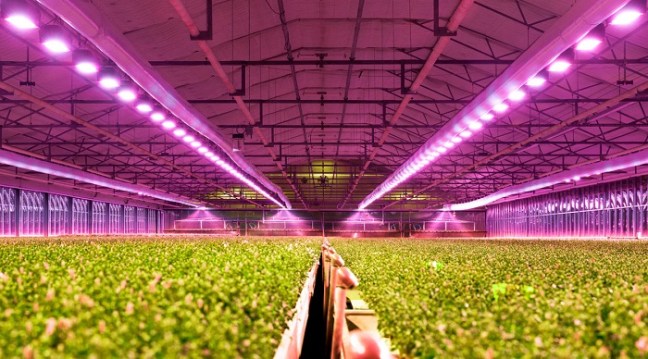
A Facility Using Osram’s Lighting Systems

Vertical Farming And The Future Of Agriculture

Osram cites increasing population and urbanization as the driving factors that will change the landscape of agriculture, creating a need for more efficient farming growing methods that minimize space. Osram also thinks that moving to large-scale urban grow facilities will cut down on the waste and pollution that stems from our current agricultural logistics system. According to their press release, 40 percent of food is spoiled between the producer and the supermarkets it arrives at. Having more farms in urban areas can reduce spoilage attributed to long transport distances. They also hope to cut down on the use of pesticides, fertilizers, and excessive water consumption by keeping plants in a controlled environment.

Furthermore, Osram says that incorporating Fluence’s LED solutions can help growers increase their harvests by 25 percent while reducing energy consumption by up to 50 percent. Considering that indoor cannabis grow facilities alone consume more than 1 percent of the energy in the United States, efficiency will be crucial for the advancement of the urban indoor grow facilities. Osram thinks that the key to such high efficiency is automation, specifically, their IoT platform called Lightelligence, which analyzes sensor data with an algorithm to suggest methods of increasing efficiency. This data can be saved into templates for the optimal growth of certain plants. In the future, Osram hopes to use artificial intelligence to completely automate the growing process.

“In the future, self-learning software algorithms will create and optimize digital plant models in order to cultivate tailor-made salads and herbs for platform partners such as supermarkets, online grocery shops and pharmaceutical companies,” -Stefan Kampmann, CTO of Osram

What Does A Smart Cannabis Grow Facility Look Like?

Although Osram glided over the topic of cannabis in their release, they did reference “medicinal plants” as a market they’re expanding into. Until cannabis is legalized federally, semiconductor companies like Osram will be vague about it to preserve their public perception. After all, if Texas Instruments acquired a company like Fluence, they wouldn’t say “we want to get into the cannabis market and get some of that dank money.”

It is quite obvious that Lightelligence is suited for a high maintenance plant like cannabis. The level of sophistication in automated grow facilities is impressive already, in fact, some facilities, like the one in the video below, can be controlled completely using just a smartphone. Osram hopes to take that even further with Lightelligence.


Osram’s Horticultural LED Development Kit

If Osram’s market predictions prove to be accurate, the time to look into upgrades is now. Osram and partners released their Horticultural LED Development Kit, which is a four-channel, solid-state lighting design that allows developers to mix light in various combinations. The reference design uses simple knobs to adjust the output of light. You can find details about the developer kit below:


This article was originally published via www.cannabistech.com by