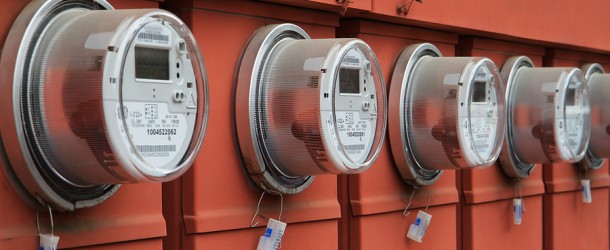
Marijuana Growers Now Qualify For Energy Discounts In California

Agricultural Cannabis Growers Now Eligible for PG&E Ag Rate and Programs

Release Date: March 01, 2017
Contact: PG&E External Communications (415) 973-5930

SAN FRANCISCO, Calif. — While recreational marijuana cannot be sold in California until January 2018, existing medical marijuana growers and future recreational marijuana growers will be eligible as of March 1 for PG&E’s agricultural energy rate.

The passage of Proposition 64 in November 2016 allows the state to license and regulate recreational marijuana cultivation and businesses.

“Cannabis is a legal crop in our state, like almonds and tomatoes. Agricultural growers now will be eligible for the same rate and energy efficiency programs as farmers of other crops,” said Deborah Affonsa, vice president of Customer Service at PG&E.

PG&E customers are eligible for agricultural energy rates if they have received a permit from their local jurisdiction for the cultivation of cannabis and if 70 percent or more of the annual energy use on the meter is for agricultural end-uses such as growing crops, pumping water for agricultural irrigation or other uses that involve agricultural production for sale which do not change the form of the product. The agricultural energy rate applies to both customers who grow cannabis outdoors and those who grow indoors in commercial greenhouses.

The agricultural energy rate does not apply to residential customers who can legally grow up to six marijuana plants inside a private residence per the state Adult Use of Marijuana Act.

Previously, medical marijuana was not considered an agricultural product by PG&E, and growers were not eligible for the agricultural energy rate. Because medical marijuana can be grown and sold in California currently, licensed growers of medical marijuana are immediately eligible for the agriculture energy rate.

Cannabis growing operations can use an extremely large amount of electricity and are considered to be equivalent to other energy-intensive operations such as data centers.

“We’ve met with representatives of the emerging legal cannabis industry and listened to their needs. We are here to help our customers make smart, efficient and affordable energy choices. Now that cannabis is in California’s future, our next step is to work with these new agricultural customers and make this industry as energy efficient as possible,” said Affonsa.

PG&E’s agricultural rates are under the jurisdiction of the California Public Utilities Commission and the state of California.

Agricultural customers with questions about rates, rules and energy efficiency programs can learn more at pge.com/ag or contact PG&E’s dedicated Agricultural Customer Service Center at 1-877-311-3276.

Solar Industry and Illinois Farm Bureau collaborate to guarantee tax revenue for rural communities and protect farmland

New law will protect farmland and help ensure $250-350 million in tax revenue for rural Illinois.

The collaboration of solar electricity and agriculture is nothing new but what is new is how states like Illinois are embracing the opportunity to integrate two industries agriculture (old economy) and solar power (new economy) together in order to help each of them grow together. This is intelligent governing policy that should be implemented in other states that need economic stimulus for rural and agricultural communities.

Governor Rauner has signed two bills that will help ensure solar development benefits farmers and rural communities in Illinois.  The state’s solar industry worked with the Illinois Farm Bureau, local authorities and other stakeholders to shape SB 486, which creates a standard tax assessment value for solar farms in Illinois, and SB 2591, which sets standards for the construction and deconstruction of solar farms on agricultural land. The Illinois House and Senate passed both bills unanimously and Governor Rauner signed the final piece of legislation on August 10th.

The solar property tax legislation (SB 486) sets a standard tax assessment value for large solar installations, creating certainty around the property tax revenue that solar farms will pay to local taxing bodies, helping to fund schools, roads and other critical services. Under the legislation, each megawatt (MW) of ground-mounted solar installed in Illinois will generate an average of $6,000$8,000 per year in property tax revenue. The industry expects to install up to 2,000 MW of ground-mounted solar farms by 2021, which will create a total $250$350 million in property tax revenue over a 25-year lifespan. Under Illinois’ funding formula, approximately 70% of this revenue will be dedicated to funding schools.

“Solar energy is a rapidly growing industry in Illinois, and it’s good not only for the environment but also for the economy,” said Illinois Senator Don Harmon (D-Oak Park), sponsor of SB 486. “It is my hope that the revenue generated from this industry can benefit local schools and communities and encourage the continued growth of solar power in our state.”

“Solar businesses are ready and willing to create new jobs, clean energy and tax revenue to support Illinois communities. This bill provides a framework for us to move forward,” said Lesley McCain, executive director of the Illinois Solar Energy Association. “The solar industry was proud to work with the Farm Bureau, county tax assessors and school districts to develop smart solar legislation that benefits all Illinoisans.”


The solar industry worked in partnership with Environmental Law & Policy Center and other advocates to support smart solar policy in Illinois.

“ELPC has helped drive clean energy development in Illinois, and we are pleased that Governor Rauner has signed the solar energy legislation that the General Assembly passed this spring,” said Howard Learner, Executive Director of the Environmental Law & Policy Center.  “The stage is set even better to accelerate solar energy development that is good for job creation and good for a cleaner energy future in Illinois.”

The farmland legislation (SB 2591) ensures that solar farms can coexist with agriculture in Illinois while providing long-term benefits to soil and water quality. SB 2591 requires that solar developers enter into an Agricultural Impact Mitigation Agreement (AIMA) with the Illinois Department of Agriculture prior to solar farm construction. The AIMA will set standards for solar construction and deconstruction and require financial assurances from developers that land will be restored to its prior use at the end of a solar farm’s life.

Governor Rauner signed SB 486 on August 10th and SB 2591 on June 29th. These bills will help Illinois reach its statewide goal of 25 percent renewable energy by 2025 while also driving economic development, new jobs and reducing pollution from electric generation.

The Illinois Solar Energy Association (ISEA) is a non-profit organization that promotes the widespread application of solar and other forms of renewable energy through our mission of education and advocacy. ISEA is the state resource for renewable energy related policy developments, educational classes, events and access to local renewable energy businesses. www.illinoissolar.org

This article was originally published in https://pv-magazine-usa.com on