Solar carports also known as “solar canopies” are an increasingly popular type of onsite commercial solar installation. These versatile structures offer features that provide more than just long term energy savings including covered parking, solar parking lot lights and integrated vehicle charging stations.
This is a simple video of a typical Sunpower carport structure we install for our clients for a commercial solar panel carport solar system. Check it out, this might be the right solution for your organization.
In general these are one of the most common dual purpose solar systems. They add value in terms of solar electricity, covered parking for staff of customers and maximize limited space in urban solar installation scenarios. One of the biggest benefits of a commercial solar system is they can stabilize a business’ cash flow. This can also provide an opportunity to invest energy savings in various areas of the company or organization.
Call us today at 480-636-0321 to learn how much we can help lower your operating costs with a renewable energy solar system by Sunpower.
This is great news! Essentially, the IRS has given commercial businesses the opportunity to take full advantage of the 30% tax credit amount for two more years. That’s good news for your finance department that wants to capture the financial benefits on your tax statements to offset your tax liabilities.
The IRS, via Notice 2018-59, has modified the Investment Tax Credit to allow solar projects to begin construction by the end of the 2019, and still get the 30% – versus being in service by that date.
Wikipedia Commons – author Martin Falbisoner, US Capitol, West Side
For all practical purposes, medium- and large-scale solar power projects that expect to take a year to two (or more) for development and construction just got a two year extension on the Investment Tax Credit (ITC).
Meaning that instead of your solar project having to finish by December 31st, 2019, it must now begin (defined below in two specific ways) on or by that date t0 qualify for 30%. This same logic applies to the follow two years and their 26% and 22% tax credits.
The IRS notes that there are two methods for ‘establishing beginning of construction’ – the Physical Work Test or the Five Percent Safe Harbor.
Onsite physical work can take many forms, however, it does include any of the following “preliminary activities”:
(a) planning or designing; (b) securing financing; (c) exploring; (d) researching; (e) conducting mapping and modeling to assess a resource; (f) obtaining permits and licenses; (g) conducting geophysical, gravity, magnetic, seismic and resistivity surveys; (h) conducting environmental and engineering studies
It is notable that manufacturing of hardware necessary to the project that is done off-site counts toward physical work, including assembly of “racks and rails, inverters, and transformers.” However, if those components come from inventory or are normally held in inventory, then they aren’t allowed to be considered “physical work.”
The Five Percent Safe Harbor provision states that construction will be considered as having begun if the taxpayer has paid or incurred – per Treas. Reg. § 1.461-1(a) – 5% of more of the total cost of the project. This does not include land costs.
Keith Martin of Norton Rose Fulbright notes that an equipment or service purchase – a ‘bare payment’ alone – can account for the 5% rule if it is delivered within 31/2 months.
Once work begins, it must keep going – meeting a continuity requirement.
Real world consequences
Also noted by Martin, is that the IRS guidance is not addressed to the directly owned residential solar power market – as this is the corporate focused Investment Tax Credit, and not the Residential Renewable Energy Tax Credit. However, it does apply to third party owned residential solar systems that solar companies lease or use to sell electricity to homeowners.
In the larger commercial and utility scale projects this ruling will absolutely be put into the spreadsheets of financiers at the utilities, which have explicitly stated these solar power tax benefits are driving their decision-making. For instance, in Xcel Energy’s recent long-term plan – which included solar power bids as low as 2.2¢/kWh – the company stated:
Bidders’ ability to take full advantage of the full federal PTC and ITC combined with falling costs for renewable technologies resulted in a robust pool of wind, solar with battery, and solar bids at unprecedented pricing.
This two year window will give investors and utilities reasonable motivation to invest in more projects, even as end of year dates arrive. And this in turn can have repercussions for fossil generation, as Xcel noted that this would allow it to close two coal plants a decade early.
Conversely, there could also be projects whose timelines are extended. For instance, the above Xcel Energy projects could potentially be pushed back up to two years under the expectation of continued declines in hardware pricing for solar panels, batteries and other components.
This article was originally published in PV Magazine on JOHN WEAVER
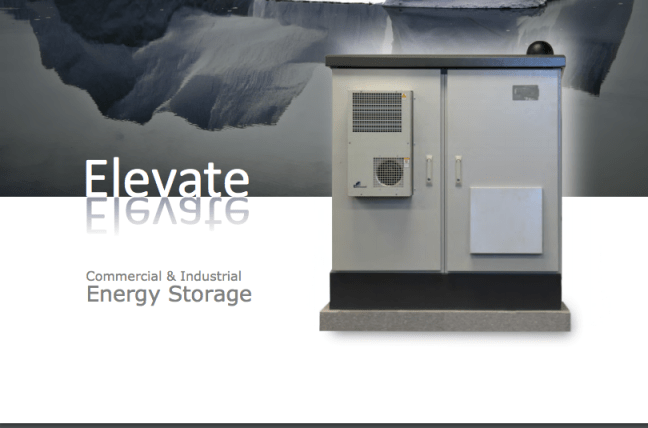
The Eguana Elevate battery system is operated by Pason Power’s Storage Architect; an intelligent EMS system with built in financial modeling and remote monitoring tools. With more than 40 years experience and millions of dollars in monitoring and control assets deployed in the oil ;gas drilling sector, Pason Power is well positioned to deliver energy storage performance with confidence. This is one of the few different storage systems we install for our commercial customer base. If you are serious about storage the Eguana Elevate system is perfect for you.
Eguana’s popular AC Battery product line has been expanded to include larger three phase models for commercial applications. The AC Battery features full integration between PCS, BMS, and Battery to deliver the industry’s highest performance and longevity in an extremely flexible package. Monitoring and control of all PCS and battery data is available through a single MESA compliant interface making the AC Battery easily dispatched by any aggregation network. A convenient location inside the enclosure is provided to install a customer supplied networking gateway.
With rising electricity prices from coast to coast, intelligent building energy management systems have been growing in sophistication and popularity. What energy management providers have been missing is the ability to time shift, peak shave, and deliver services back to the utility. By integrating energy storage with broader building energy management solutions, rather than making storage a standalone project, the battery system can deliver higher value and be installed with lower upfront cost. Energy storage will achieve its true potential when it gets deployed as part of an overall building energy management system, and only a factory assembled product can make it happen.
Electric Vehicle adoption is driving the expansion of public EV charging networks. However, fast charging sites are being saddled with high demand charges that raise prices for customers and undermine convenience. The advanced control networks that manage these sites are capable of delivering grid services, and much has been written about the potential to dispatch the batteries in parked vehicles for grid support capacity. But grid service contracts rely on capacity being there when its needed, customers prefer to have their battery filled while parked at a charging station, and vehicle manufacturers are wary of the impact of additional cycling on warranty exposure. Adding an AC Battery at the charging site solves both problems: reducing charging costs by offsetting the fast charging demand, and allowing the charging network operator to become an energy storage aggregator and earn additional revenue from grid services.
Contact us today at 480.636.0321 to learn how solar panels and battery storage will make your business more profitable now and in the future.
NCIA’s Aaron Smith re-caps another successful Cannabis Industry Lobby Days! Watch this video to hear more about NCIA Members’ experiences and why you should plan to join us next year in D.C.
NCIA’s staff and professional lobbying consultants work year-round in our nation’s capital to build support for the cannabis business community and the policy changes needed for our industry to reach its full potential. That work has led us to the tipping point we are seeing today and it’s all been made possible by the financial support of our members. This industry is made composed of legitimate businesses that positively impact our communities by providing job, wealth creation and medicine to people within those communities. Support the NCIA and support cannabis.
SunPower isn’t just powering roofs and solar farms these days. The company, which touts its solar panels as the most durable and efficient on the market, is looking at other applications. I’d be hard pressed to find one as awesome as the upcoming Mission SolarStratos expedition which will be powered by its 22-24% efficient Maxeon™ solar cells.
The SolarStratos is an electric plane that has the flight characteristics of a low drag glider. It has extremely long thin wings and a very small profile. However it is outfitted with an electric motor, a very efficient front propeller, and wings and tail covered with around 24 square meters of solar panels. Inside fit up to 2 pilots in fighter configuration and what appears to be a 20kWh battery (nearly the same size as the 125 mile Hyundai IONIQ).
Interestingly this plane will not be pressurized, requiring the pilots to wear space suits that are also powered by the energy from the solar panels and stored in the battery.
Some stats from the press release (below):
Length: 8.5 meters – about 30 feet, or the distance from the end zone to the 10-yard line on an American football field
Wingspan: 24.8 meters – about 81 feet, or the length of two standard city buses
Weight: 450 kilograms – about as heavy as a grand piano; to make SolarStratos its lightest, the cabin will not be pressurized, requiring pilots to wear astronaut suits that are pressurized by solar energy
Engine: 32-kilowatt electrical engine, about one-third the size of what would power an electric vehicle
Energy: 22 square meters of SunPower Maxeon solar cells, each reaching 22 to 24 percent efficiency
Batteries: One 20-kilowatt lithium ion battery
Autonomy: Self-generates electricity with solar to power the plane for more than 12 hours
Contact us today to learn how Sunpower solar panels can power your commercial business by lowering your annual operating costs. Call 480.636.0321




 Canna Solar