Blog

PRINCESS ELISABETH ANTARCTICA RUNNING ON RENEWABLE ENERGIES

RUNNING ON RENEWABLE ENERGIES

Two of the most omnipresent features of Antarctic weather (during the Austral summer) are the wind and the sun. Two renewable sources that provide free energy to the “zero emission” Princess Elisabeth Antarctica.

A Mix of Renewable Energy Sources

A MIX OF RENEWABLE ENERGY SOURCES

While the sun never sets in Antarctica for one half of the year, it never rises for the other half. This means that, in order to function properly during the Antarctic winter, the Princess Elisabeth Station needed a second source of energy that would be available all winter long.

The katabatic winds on the Antarctic continent provided the answer to that issue, as the wind gusts from the plateau are as fierce in the winter as they are in the summer.

Nine Wind Turbines

NINE WIND TURBINES

Along the ridge of the Princess Elisabeth Station are nine wind turbines, installed by the IPF crew to complement the solar installations.

Each of the wind turbines is designed to withstand the most vicious storms on Earth. The blades of the wind turbines can close down in the event of a storm, thus reducing the rotating speed in order to prevent any damage from occurring to the wind turbine.

TWO BREEDS OF SOLAR PANELS

Photovoltaïc Solar Panels

Photovoltaïc Solar Panels

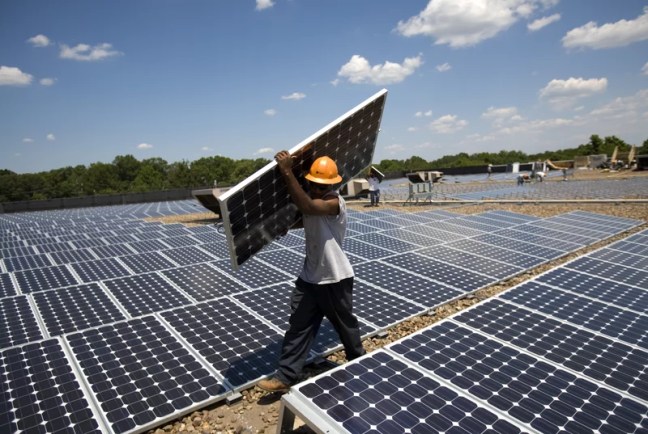
These solar panels cover most of the surface of the “zero emission” Princess Elisabeth Station and the roof of the technical spaces. The panels feed the smart grid of the station with electricity, while any excess production is stored in the batteries.

Thermal Solar Panels

Thermal Solar Panels

Located on one side of the roof of the Princess Elisabeth Station, the thermal solar panels are used to melt the snow and heat the water to be used in the station’s bathrooms and kitchen.

Batteries Room

BATTERIES ROOM

The energy-producing solutions implemented at the Princess Elisabeth Station are incredibly efficient, so much so that solutions had to be foreseen for storage of any excess energy.

A room full of classic lead-acid batteries enables the station to store energy for times when demands exceeds the current energy production.

Backup Solutions

BACKUP SOLUTIONS

While the renewable energy systems that power the station are reliable and continuously checked, even in the harsh conditions of Antarctica, two generators were installed for security and backup. They are also used to provide scheduled full load cycles which are part of the battery bank life performance.

In the future, the station’s engineering team plans to install hydrogen fuel cells as an additional intermediary backup system.


This content was originally published on http://www.antarcticstation.org/  This is amazing because it shows their are no limits to renewable energy no matter where it is needed on this planet. We can generate all of our power that we need from renewable resources as a human race but need to collectively come together to make it a reality.
Combining Solar Panels With Agriculture Makes Land More Productive

Solar panels are wonderful things, but they do take up a lot of space, especially for larger, utility-scale systems. In some densely populated countries like China and India, where loss of farmland can lead to hungry people, floating solar farms are being built to take advantage of the surface area of lakes and rivers. Researchers at the Fraunhofer Institute For Solar Energy Systems have conducted an experiment near Lake Constance — which borders Germany, Lichtenstein, and Switzerland — regarding another solution.

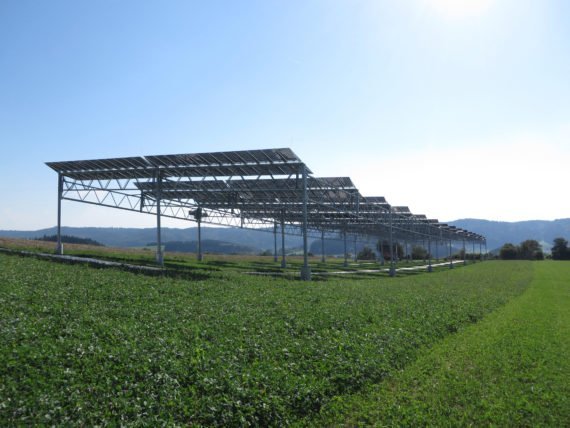
solar panels and crops

According to a Fraunhofer press release, the experiment involves 720 bi-facial solar panels covering about a third of a hectare of agricultural land (on the Demeter farm cooperative Heggelbach). The panels are mounted high enough to allow the crops planted below to receive almost as much sunshine as they would if the panels were not there and to permit farm machinery to operate beneath them. After a year of trials, the research showed the dual use system increased the total productivity of the land by 60%.

© Photo Hofgemeinschaft Heggelbach

Fraunhofer refers to the dual use system as “agrophotovoltaics,” or APV. “APV has the potential to open up new space that is urgently needed for the PV expansion in Germany, says professor Hans-Martin Henning, the director of Fraunhofer ISE. “At the same time, APV can mitigate the conflicting interests between agriculture and open space PV systems for viable land. Before market readiness, however, other sectors and differently sized systems still must be tested. Also, the technical integration must be further advanced, for example, the implementation of storage.”

The first crops tested were winter wheat, potatoes, celeriac, and clover grass. “The crop yield of clover grass under the PV array was only 5.3 percent less than the reference plot,” reports professor Petera Högy, an agricultural expert at the University of Hohenheim. The yield for potatoes, wheat and celeriac were about 19 percent less.

“From the perspective of agricultural science, agrophotovoltaics is a promising solution for increasing both the land use efficiency and the share of renewable energy provided by the agricultural sector,” says professor Iris Lewandowski, who heads up the department of biobased products and energy crops at the University of Hohenheim.

The 194 kilowatt solar installation generated 1266 kilowatt-hours of electricity per installed kilowatt, one third more than the average value of 950 kilowatt-hours per kilowatt in Germany. 40% of the power produced was used to charge the batteries of the electric farm equipment and harvest crops. The team believes 70% of the energy could be utilized if a storage battery was included in the system. Any excess electricity was sold to Elektrizitätswerke Schönau, an electric utility company that uses 100% renewable energy and is a partner in the project.

“In order to provide the necessary proof-of-concept before market entry, we need to compare further techno-economical applications of APV, demonstrate the transferability to other regional areas and also realize larger systems,” says project manager Stephan Schindele. Experiments involving solar in combination with fruits, berries, hops, and grapes are planned for the future, along with various technologies such as energy storage, special films with organic solar cells, and solar PV water treatment systems.

While more research is needed, the initial results indicate that APV is a significant step forward for solar power in agricultural settings.

This article was originally published on November 24th, 2017 by   https://cleantechnica.com/

Ray Kurzweil: Here’s why solar will dominate energy within 12 years

Ray Kurzweil has made a bold prediction about the future of solar energy, saying in remarks at a recent medical technology conference that it could become the dominant force in energy production in a little over a decade. That may be tough to swallow, given that solar currently only supplies around 2% of global energy—but Kurzweil’s predictions have been overwhelmingly correct over the last two decades, so he’s worth listening to.
Kurzweil’s basic point, as reported by Solar Power World, was that while solar is still tiny, it has begun to reliably double its market share every two years—today’s 2% share is up from just 0.5% in 2012.

Many analysts extend growth linearly from that sort of pattern, concluding that we’ll see 0.5% annual growth in solar for the foreseeable future, reaching just 12% solar share in 20 years. But linear analysis ignores what Kurzweil calls the Law of Accelerating Returns—that as new technologies get smaller and cheaper, their growth becomes exponential.

But even those giants ignore Kurzweil at their own peril. He predicted the mobile Internet, cloud computing, and wearable tech nearly 20 years ago—all on the basis of the same principle of accelerating returns that’s behind his solar call.

This article was originally published

By DAVID Z. MORRIS

On April 16, 2016 on  www.fortune.com
For more of Ray Kurzweil’s predictions got to his own website http://www.kurzweilai.net/

RENEWABLE ENERGY: SMART GREENHOUSES GENERATE SOLAR POWER AND GROW CROPS AT THE SAME TIME

Tomatoes and cucumbers appear to grow just fine—and just as healthily—in smart, solar-powered greenhouses that capture solar energy for electricity.

Scientists from the University of California, Santa Cruz, have shown how crops can grow as healthily in these new greenhouses as they do in conventional greenhouses.

“We have demonstrated that ‘smart greenhouses’ can capture solar energy for electricity without reducing plant growth, which is pretty exciting,” Michael Loik, professor of environmental studies at UCSC, said in a press release. Loik is the lead author for the paper, published in the American Geophysical Union’s journal Earth’s Future. 

Solar Power Trapped by a Red Roof

Bright magenta panels cover the tops of the greenhouses, soaking up sunlight and transferring the energy to photovoltaic strips. From there, electricity is produced.

The greenhouses are able to take sunlight for energy and leave the rest, allowing plants to grow using a technology called Wavelength-Selective Photovoltaic Systems (WSPVs). The technology, developed by co-authors Sue Carter and Glenn Alers, is less expensive and more efficient than traditional photovoltaic systems.

The team tested the growth and fruit production across 20 varieties of tomatoes, cucumbers, lemons, limes, peppers, strawberries and basil at two locations at the Santa Cruz campus and one in Watsonville, California. Scientists reported that 80 percent of the plants were unaffected by the slightly darker lighting from the magenta panels, and 20 percent of the crops grew better. Tomato plants needed 5 percent less water under the magenta panels.

Reducing the energy used in greenhouses is crucial since the use of greenhouses to grow food has increased by sixfold in the past 20 years, according to Loik.

Solar-powered greenhouses are one of several developments for new ways of farming in recent years.

loik-greenhouse-320
Plants grown in the smart greenhouse were just as good as plants grown in conventional greenhouses. NICK GONZALES

Smart Greenhouse Detects Infestations

Another company, NatureSweet, has outfitted its greenhouses in Arizona with artificial intelligence, reported CNN. The plants are monitored with 10 cameras installed in the greenhouse ceilings which continuously take photographs to detect insect infestations or dying plants.

The software, developed by a company called Prospera, recognizes those problem spots and sends feedback 24/7. Previously, reported CNN, NatureSweet’s employees walked through the greenhouse in order to spot issues with the plants.

Green roofs are another method of growing food in an attempt to utilize space and close gaps in access to foods in urban areas.

In Washington, D.C., Up Top Acres has opened five urban farms on the rooftops of buildings since 2015, reported Washington City PaperGreen roofs improve storm-water collection, habitat protection and energy preservation, in addition to providing food. The company’s co-founder, Kathleen O’Keefe, told the paper that the company may not produce enough food for the city, but green roofs can change the way people think about food, in addition to utilizing unused space.

This article was originally published by BY  


Solar powered aquaponic greenhouses grow up to 880 lbs of produce each year

Fresh produce – ideally grown locally right in your backyard – is essential to a healthy diet, but with scores of people either lacking the space, time, or knowledge to cultivate their own food, for many that ideal simply isn’t attainable. Enter French company Myfood. They aim to bring food production back home, and they’re doing it with smart solar aquaponic greenhouses. These groundbreaking greenhouses, which are small enough to fit in a yard or even a city balcony, can produce 660 to 880 pounds of vegetables every year.

Myfood is pursuing the vision that everyone should be able to grow their own produce locally. To that end, they’ve come up with small family greenhouses powered by the sun that can function off-grid. Their Family22 greenhouse is 22 square meters, or around 237 square feet, and comes complete with solar panels and a rainwater collection system. Their model City offers a smaller option for those residing in busy metropolises – it’s just 38 square feet. Both models can be installed above ground, making them suitable for backyards or rooftops.

Related: The Sunbubble greenhouse is a mini Eden for your backyard

Inside the greenhouse, fish swimming around the base of vertical towers fertilize the vegetables growing – no synthetic fertilizers or pesticides needed. Inspired by permaculture, the team also developed raised beds that can surround the greenhouse for added food production. Ultimately, after several months, the beds become self-fertile.

Myfood, greenhouse, greenhouses, aquaponic, aquaponics, solar, solar power, solar energy, solar panels, smart greenhouse, smart greenhouses, technology, app, gardening, plants, vegetable, vegetables, cucumbers, tomatoes, fruit, local food, locally grown food, backyard, family, city

The greenhouses are intended for everyone from seasoned gardeners to people with zero gardening experience. Often one barrier that stands in the way of home food production is a lack of knowledge, so Myfood makes it easy for anyone to get started growing their own food through their smart structures designed to control the climate to guarantee success, according to Myfood. The team’s app enables families to remotely monitor the greenhouse.

Myfood, greenhouse, greenhouses, aquaponic, aquaponics, solar, solar power, solar energy, solar panels, smart greenhouse, smart greenhouses, technology, app, gardening, plants, vegetable, vegetables, cucumbers, tomatoes, fruit, local food, locally grown food, backyard, family, city

Myfood co-founder Mickaël Gandecki said, “The production of fresh and natural food, close to the consumer, offers a response to the environmental impact and lack of transparency of intensive, industrial agriculture.”

Myfood, greenhouse, greenhouses, aquaponic, aquaponics, solar, solar power, solar energy, solar panels, smart greenhouse, smart greenhouses, technology, app, gardening, plants, vegetable, vegetables, cucumbers, tomatoes, fruit, local food, locally grown food, backyard, family, city

Myfood recently unveiled what they described as the first European line of smart aquaponicgreenhouses at the Paris International Agricultural Show 2017 during February 25 through March 5.

In France and Benelux, a City model costs around $4,820 and the Family22 around $8,577. Those figures include installation, delivery, and tax. Outside the European Union costs are slightly different; not including installation, delivery or tax, the City is around $3,569 and the Family22 is around $6,432. You can find out more on their website here.


This article was originally published by