A Greener Green Part 3: CO2 Emission

With the massive energy consumption of the cannabis industry comes the eminent emission of CO2. This output is posing a challenge for states with goals to reduce their greenhouse emissions and create sustainable cannabis programs.

As explored in Part One of this series, the cannabis industry is, and continues to be, the most energy-intensive agricultural sector, as well as one of the most energy-intensive businesses per square foot.  Production and distribution cost of the cannabis industry in the United States is approximately $6 billion a year, resulting in the emissions of 15 million metric tons of greenhouse gases, the equivalent of 3 million cars.  From a consumer standpoint, the energy expenditure of producing a single cannabis cigarette is comparable to burning a 100-watt light bulb for 25 hours. It is feared that the cannabis industry could wipe out the gains made over the past decade to stabilize energy consumption, as it is clear that the industry has no intention of slowing expansion.


How Cannabis Creates A Carbon Footprint

Greenhouse gasses are a group of compounds that trap heat in the atmosphere, thus causing the Earth’s surface to be warmer than it would be if not present.  Known as the greenhouse effect, the presence of these compounds is considered to be a cause of climate change and global warming.  Greenhouse gasses, the most common being CO2, can enter the atmosphere through both natural and human activities.  Natural activities, such as plant and animal respiration, are not comparable to the amount of CO2 released by human activities.  Countless human activities produce CO2 emissions (intensive livestock farming, industrial process), but the most significant contributor is fossil fuel combustion for energy supply.

The massive amount of energy used to support cannabis cultivation typically comes from existing energy infrastructures, or the grid, which is primarily powered by fossil fuels, such as coal.  Coal, as it just so happens is the most carbon-intensive of all fossil fuels


Taking A Proactive Stance Against CO2 Emissions

Within the cannabis industry, the paramount environmental concern is with the energy expenditure of, thus CO2 emissions created by, indoor productions.  The nation is achieving progress towards climate change solutions, yet state and federal policymakers are making little to no effort to hold indoor cannabis operations accountable for their CO2 contributions.  Policies and programs that improve energy- efficiency pass over the cannabis industry, as well as do any appropriate ratings for cultivating within specific energy-efficiency standards (LEED, ENERGY STAR).

Currently, the Executive Office of Energy and Environmental Affairs in Massachusetts is taking a proactive stance against the carbon footprint that the cannabis industry could potentially create.  They are recommending energy provisions for cannabis cultivators in regards to such areas as lighting, heating, and AC.  The goal is for these recommendations to become requirements to obtain a cultivator license.

Although most states have missed the opportunity to set impactful energy guidelines for the cannabis industry, some cultivators are taking measures into their own hands to reduce their carbon footprint.   By upgrading to energy-efficient lights, pumps and cooling systems, growers are proactively decreasing their carbon footprint.  Microgrids should also soon start appearing across the industry.  Microgrids, which use solar, sored and combined heat and power (CHP), will also reduce a cultivator’s carbon footprint as well as slash energy costs by as much as 20 to 25%.  Other forward-thinking companies are depending on solar and wind-powered energy for their grows.

Power companies that receive any federal subsidies are reluctant to provide rebates and incentives to the industry, which is still illegal under federal law.  Because of this, cultivators often make these energy-efficient upgrades to obtain some third-party certification, such as Clean Green.  Available in multiple states, Clean Green has modeled its program after existing national and international standards.

Can The Problem Be Solved Through Legalization?

As the industry is still in its infancy stage, the energy consumption and carbon footprint of the cannabis is expected to continue to grow over the next several years, while more efficient and green technologies are discovered and implemented.  Many tend to believe that one way to reduce the overall energy expenditure and carbon footprint of the industry is through legalization and decriminalization.  Legalization would allow for controlled energy costs, enforce energy limits and reward efficient growers.   What many may view only as a downfall of the industry should instead be perceived as an excellent opportunity for advancement in environmental practices.  The cannabis industry and legislators both have a unique opportunity to turn the industry into a cutting-edge, environmentally friendly one and lead other sectors by example concerning improvement and long-term sustainability.


This article was originally published on www.cannabistech.com by 

A Greener Green Part 2: Water Consumption And Innovation

As legalization is on the rise in the US, water consumption has become a concern for the cannabis industry, especially in Western states.

In the first part of this series, we explored the looming environmental issues of energy consumption that surround the cannabis industry.  More recently, however, the ecological impact of water consumption and sustainability has also arisen for the cannabis industry.  Due, in part, to the recent and expeditious westward expansion of the industry, the question of water consumption is on many minds, as both legislators and cultivators proactively seek out sustainable water consumption practices.


Water Usage Red Flags

As previously covered in this series,  some believe the answer to reducing the environmental impact of the cannabis industry is through legalization.  Full legalization would allow for more government agricultural regulations as well as legally incentivize producers to become more sustainable in their practices. Legalization would allow grant money for research and improvements, which are currently available to other agricultural departments, to be offered to the cannabis industry.

Due to the lack of research, an ongoing issue throughout the industry, no one knows the exact impact that the industry will have on the environment.  However, in the case of water, especially in California, legalization has become key in protecting the environment.  California’s north coast region,  known as the  “Emerald Triangle,” has been plagued with outdoor illegal grows for decades, which have proved detrimental to the local environment.  These illegal grows are most often on public land, where water is typically irrigated from surrounding bodies of water, such as streams.  Runoff water is also an ecological issue, as the use of certain pesticides and fertilizers are harmful to the environment.

In 2015, the California Department of Fish and Wildlife published a study stating that cannabis grows in the Emerald Triangle average as much as 6 gallons of water per plant, per day.  Multiply that by the massive scale of California’s grows, and it becomes easy to see how in a state plagued by drought, water consumption has become a headline issue.  These numbers, however, could also be a gross overestimate, as NORML has cited that the average water consumption is closer to 2.6 gallons per plant per day, however, due to the lack of research in this area, the actual water consumption and usage has yet to be determined.


Water Regulations And Proactivity

With the recreational legalization of cannabis in California came strict regulations and expectations for growers.  Growers that pull from water sources such as rivers and streams will be responsible for having their own stored water supply.  By enforcing growers to have a water supply, water collected throughout the year will alleviate consumption during the winter months, when water is scarcest in California.  Although some growers may only implement the regulations for initial inspections and licensure, the majority of growers are meeting, and exceeding regulatory demands.

Outdoor cultivators, not just in California, are motivated to implement sustainable practices.  Whether it be to meet regulations, lessen their environmental impact, or marketability, cultivators are invested in their crops and seek to make it a cutting-edge industry that exceeds the practices of other agricultural practices.

Indoor grows make water consumption and waste significantly easier to control, and many cultivators are already leading the way in reducing water usage.  Creative irrigation practices are eliminating the ability to over-water and reducing evaporation; there are also ways to recycle and reuse runoff water.  Cultivators are also starting to collect the condensation from the humidity produced by plants and store it for use.  Brandy Keen, co-founder and senior technical advisor at Surna, a company that creates and distributes water-efficient indoor cultivation equipment, boasts that indoor water use could be a net-zero consumption.  As water-efficient practices are becoming more common, and consumers in specific markets, such as California, are starting to become more educated on environmental issues surrounding cannabis, cultivators are proactively seeking out new and improved watering methods.

Endless Opportunities For Improvement

While the primary purpose of this series is to highlight the environmental footprint of the cannabis industry in the US, one other take away should be that in the cannabis industry, there is an overwhelming necessity for improvement, and that is not a bad thing.  With the need for improvement comes endless opportunities, for businesses as well as the entire industry.  Development and advancements of environmentally sustainable practices in the cannabis industry have the potential to put cannabis on a par with other agricultural and showcase how the industry’s technological advancements can drastically lessen the environmental impact and gain industry support and acceptance.

This article was originally published on www.cannabistech.com by 

Electric Utilities Work With Cannabis Growers to Save on Power Costs

Understanding how your utility is charging you for electricity and how to maximize your electricity consumption in order to maximize your yield is essential for your business.

Despite knowing for years that electricity is a major expense that can significantly affect everyone’s bottom line, marijuana businesses – especially growers – are still struggling to keep costs manageable.

The good news is that a burgeoning number of utility companies are working with cannabis cultivators to better manage costs by:

  • Conducting in-depth case studies to better understand energy-consumption issues.
  • Assigning employees to work exclusively with marijuana businesses.
  • Recommending lighting as well as heating, ventilation and air-conditioning (HVAC) systems, which they say can save cultivators tens of thousands of dollars annually.

Here are some of the points growers are focusing on as they consider potential energy savings:

1. Keep an open mind

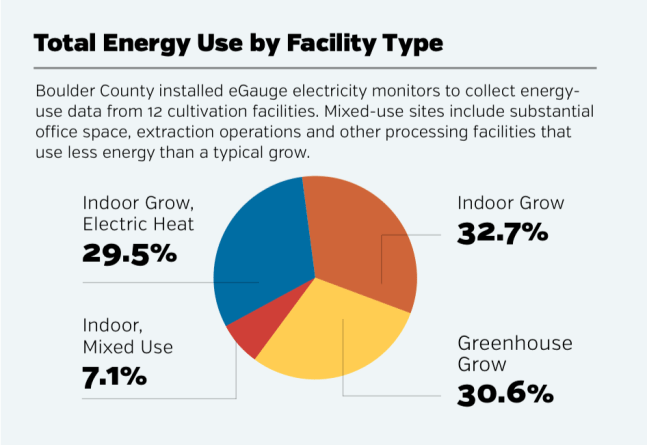
Electricity consumption typically is the second-largest cost incurred by indoor cultivation facilities.

That said, marijuana business executives can benefit from working with utility operators – provided an MJ exec is willing to as well.

“In May of 2017, I started devoting 100% of my time to the cannabis operations coming into our territory, knowing that all those companies were going to fill one portfolio of commercial account management,” said Matt McGregor, strategic account manager, cannabis operations, for the Sacramento Municipal Utility District (SMUD).

McGregor estimates he has roughly 200 marijuana customers, mostly growers, but also about two dozen customers involved in extraction, infusion, processing and packaging.

While more cultivators are accepting or seeking help from utilities, many remain leery.

“Some growers are extremely open and want us to learn,” McGregor said, “and some, we have just one conversation with and then we never see them again.”

2. Understand the public/private difference

Not all energy companies are willing to help. Their cooperation depends in large part on whether they are dependent on one of the nation’s four federal power administrations which serve most of the United States, or one of the nation’s federally owned companies such as the Tennessee Valley Authority.

Utilities that receive their power from these federal entities generally balk at providing cannabis businesses because they fear federal interference.

Private utilities are less prone to those fears. Consider Puget Sound Energy (PSE), an investor-owned utility in Washington state, which has helped about 80 cannabis customers with about 100 energy-savings projects since 2014.

PSE doesn’t get power or conservation funds from the region’s federal power company, the Bonneville Power Administration.

Rather, PSE buys the power it sells to customers off the market or from its own power generation.

“So, we didn’t have to be concerned about losing federal funding by serving the cannabis sector,” said David Montgomery, an energy management engineer with PSE.

He added that cannabis businesses are “legal within the state and the state is our governing body, so we’re going to treat them like any other customer.”

Xcel Energy – a private utility operator serving eight Western and Midwestern states including Colorado – goes by the same premise.

“We work with marijuana companies because they are legal operating entities in the state of Colorado,” Xcel spokesman Mark Stutz said.

“We are regulated at the state level, and to deny services would be in violation of state law.”

3. Consider the mutual benefit for both growers and utilities

It’s also in the interest of utilities to help growers cut their costs.

As more customers demand more energy, utility companies may have to build new power plants to supply customers’ demands, which is costly.

It’s cheaper to persuade existing customers to reduce energy usage by using conservation practices and buying newer, more efficient lighting and HVAC.

“It was difficult in the first several years of legalization from an operational distribution standpoint to meet the needs of some of the growers,” Xcel’s Stutz observed.

The utility had historically set up electric distribution systems in warehouse areas that were meant to meet certain loads.

Later, these districts became home to cannabis cultivators, and the energy consumption increased dramatically, he explained.

“This meant that we often had to upgrade distribution to meet the higher, 24-hour demand for use,” Stutz said.

Now, utilities are looking to the cannabis industry as a place where they can help customers take pressure off the grid.

“With the legalization of the cannabis market in Massachusetts, and the fact that this business is extremely energy-intensive, this is an agricultural area where there is opportunity to proactively influence the design of these facilities in order to mitigate their very significant energy demand,” noted Robert Kievra, a spokesman for National Grid, a major utility in Massachusetts.

About 70% of the cannabis facilities in National Grid’s service area participate their rebate and incentive programs, Kievra added.

4. Consider LED and HVAC technologies 

Energy companies say the best way for marijuana growers to reduce their energy consumption is to switch from conventional lights to LED, and to upgrade HVAC.

But many growers remain skeptical of LED lights, something that McGregor blames on a lack of education.

“Trying out LED technology from two years ago is like trying out a 10-year-old laptop,” McGregor said.

Because cultivators also have a lot to gain from marijuana-related energy rebates and incentives, lighting companies are often the ones connecting utilities with growers.

“The folks who are really out there pushing LEDs, and saying PSE has money available, are the lighting companies and their reps,” PSE’s Montgomery noted.

“They’ll bring us growers with whom we can do projects with,” added Montgomery, noting that his company works with about six lighting firms that provide customers with LED technology.

“The lighting companies are aware of our incentive programs, so when they’re selling lights they tell the growers, ‘Hey, we can work with PSE. They have cash available to help pay for these lights because they’re more efficient.”

Montgomery estimated he saves his marijuana customers about 50 million kilowatt hours per year.

A kilowatt hour is a unit measuring the amount of watts used over 60 minutes. For example, 1,000 watts of power used for one hour represent one kilowatt hour.

Despite outreach from PSE and lighting companies, cannabis businesses may have not taken much advantage of incentive programs.

For example, Montgomery reckoned that LED lights should be installed at about one light per a 4-foot-by-4-foot area of canopy.

That means 10,000 square feet of canopy would require about 625 lights, with each light costing about $1,000 each.

Montgomery said PSE typically picks up 50%-70% of that cost through rebates, although it’s sometimes lower based on the types of lights that are chosen.

“Even if we can pay a big part of it, they’re still on the hook for their portion of the project costs,” he observed.

This article was originally published in MJ Biz Daily. https://mjbizdaily.com/ written by

Omar Sacirbey  who can be reached at omars@mjbizdaily.com


Lowering Electricity Bills Without Sacrificing Crop Yields

Electricity consumption is typically the second-biggest cost incurred by indoor cultivation facilities (and often greenhouses), behind labor. According to cultivation company data analyzed by the nonprofit Resource Innovation Institute, grow facilities on average expend about 275,000 kilowatt hours per square foot of canopy. Some grows spend much more, while outdoor grows spend little or nothing on electricity, according to Derek Smith, executive director of the Portland, Oregon-based research organization.

Screen Shot 2018-07-31 at 3.28.01 PM

The high cost of electricity for indoor growing shouldn’t come as a shock, so to speak, given a grow facility’s need for lighting, air conditioning, dehumidifying and other demands. “ The more competitive the market gets, the more people are going to have to pay attention to resource management,” said Casey Rivero, head grower at Yerba Buena in Hillsboro, Oregon. “Power is one of your biggest costs, and being able to efficiently maximize your power is key.”

While reducing your cultivation site’s electric bill without making major sacrifices on yield and quality may sound like a tall order, there are ways to do it. The two biggest consumers of electricity, according to a 2014 study performed by the Northwest Power and Conservation Council, are lighting, which accounts for about 38% of energy consumption, and dehumidification and ventilation, at 30%. Cooling takes up 21% of power demands, while the remaining 11% of power use can be attributed to heating, water management, CO2 and curing. That said, the easiest place to seek energy savings is through lighting – in addition to heating, ventilation and air conditioning, or HVAC. Here are three ways to cut your electricity bill.

1) Determine How Much Juice You’re Consuming

To save on power, you first must know how much electricity you’re consuming and what it is being used for, such as lighting and HVAC. The simplest way to measure how much you’re using is to calculate your kilowatts per day.  Next, estimate how many hours per day your lighting and HVAC equipment are running and at what power level to understand how much juice is going to each. Growers should know that the amount of lighting and HVAC being used will depend where plants are in the growth cycle. Outside conditions play a role, too, because air conditioners and dehumidifiers must work harder on hot and/or humid days, respectively.

“It’s kind of a guestimate, but it’s better than nothing,” Rivero said. To get more accurate data, Rivero suggests using power monitors that can be placed on breaker boxes to track electricity consumption based on a particular power source, such as a specific wall of air conditioning units or lighting panels. How many breaker boxes a cultivation facility has varies on the size and design of the facility as well as what kind of power service systems (single phase or three phase) and voltage power the site. Yerba Buena, for example, has individual subpanels for lighting in every room as well as a panel for each of the facility’s 10 HVAC units. There are also panels for less power intensive equipment, like water pumps. Basic power monitors cost between $600 and $1,000, while the most expensive models can hit $10,000, Rivero estimated.

Screen Shot 2018-07-31 at 3.39.19 PM

A cultivation site doesn’t need to buy a power monitor for every breaker. But having several makes it easier to run comparisons, say between different grow rooms, different days or between lighting and HVAC units within a room. In addition, energy-management companies can install data equipment to make it easier to track and manage power consumption.

Screen Shot 2018-07-31 at 3.39.29 PM

2 ) Get the Lowdown on LEDs

While lighting uses the most electricity at indoor grow sites, most cultivators still use high-pressure sodium lights, typically 1,000 watts. Not only is the wattage a major energy drain, but HPS lights produce high heat, forcing air conditioners and dehumidifiers to work harder adding to utility bills. More efficient and environmentally friendly LED lights have been around for several years, but only a small number of growers have adopted them. Many growers acknowledge that LED lights are more efficient but argue that they don’t produce the yields that HPS lights do and, therefore, reject them. For example, Massachusetts marijuana industry executives were up in arms in March after regulators imposed a cap on electricity use amounting to 36 watts per square foot of cultivation space. The move, in effect, forced growers to adopt LED lights a move some executives hope to overturn.

When Allison Justice arrived at San Diego County, California-based OutCo in late 2016, she also was told that LED lights couldn’t perform like HPS lights, and that whatever the cost savings, they would be lost to the lower yields that were expected. Justice, OutCo’s director of cultivation, wanted to see for herself, so last year she started running trials comparing 1,000- watt HPS lights with LED lights from Fluence, a commercial LED firm whose wattages were 330, 560, 660 and 1,000. More wattage equals more light intensity. Testing on two strains, Justice and her colleagues found the LED 1,000-watt lights produced 21% higher yield than 1,000-watt HPS lights, while 660-watt LEDs resulted in 13% more yield and a 37% drop in energy use. At 37% decrease, Justice noted, didn’t account for savings from the air conditioners, which ran less because LEDs give off less heat. Justice acknowledges that LEDs are more expensive – a Fluence 660 is about $1,280, while a standard HPS light is around $400 but the cost is more than outweighed by the energy savings and increased yield.

Another advantage of LED’s: They allow growers to “double stack” a layer of plants on top of another one, effectively doubling the cultivation space. How? Because HPS lights are so hot, they must be farther from the plants than LED lights, which are cooler. “It’s like getting another facility for free. The ROI on that is a no-brainer,” Justice said, referring to return on investment.

Following the successful tests, OutCo started retrofitting its facility for LED lights late last year, essentially interrupting production for six weeks to tear out old benches and lights and install new rolling benches, irrigation, drainage, HVAC and other equipment. Since then, Justice and her team have harvested two crops each of several strains, including Mendo Breath, Cookie Pucker, Grape Pie, Strawberry Banana and Black Jack. “Yield and quality is phenomenal,” Justice said. “ There’s always tweaking to do when you start something like this. Overall we’re very happy.” Other cultivators are also gaining confidence in LEDs. “I was a holdout because I never saw the production that I could get out of an HID (high-intensity discharge) with an LED. They are now rapidly catching up,” said Eli McLean, a cultivation consultant and commercial grower in Salem, Oregon. “Once you run the numbers, you realize that you get good yield of top-shelf cannabis that cost me a third less to produce.”

McLean is now researching LED lights with quantum dot technology that he said operate at about 91-92 degrees Fahrenheit. The lights are manufactured by a company called QD Grow. “ is means you’ll need far less latent cooling because you have far less latent heat,” McLean said. “I think you can see savings on your cooling costs of up to 65% for LED versus what’s being used today.”

3) Make Your HVAC Less Power Hungry

Finding ways to reduce HVAC power use is good for the environment and your company’s finances. Yerba Buena was able to get rid of its dehumidifiers, for example, which significantly reduced the company’s utility bills. How did the Oregon grower do it? It adapted sensors that measure leaf moisture and air humidity and wired them to activate air conditioners (which also perform dehumidification) when the leaf surfaces reach a certain moisture level. Remember that leaf surfaces can transpire moisture because of heat from grow lights. By activating air conditioners when leaves start to transpire – versus waiting for a preset interval Rivero can both absorb air humidity and lower temperatures that had risen because of light heat. That, in turn, reduces leaf transpiration even more.

Screen Shot 2018-07-31 at 3.52.39 PM

By reducing overall plant transpiration, and more efficiently timing air conditioning use, Yerba Buena was able to regulate and reduce humidity, so it could be handled by air conditioning alone. e company ditched its last dehumidifier in February. “Our goal is to stabilize that humidity and heat. You need to pay attention to the leaf surface, because the leaf surface temperature is what’s going to allow that water to come out of the plant,” Rivero said. “ The more sensing and control equipment you have that talks with HVAC and lighting together rather than separately, the easier it is to achieve that balance, as opposed to having those things separate and hope they line up.”

This article was originally published in Marijuana Business Magazine • July 2018

https://mjbizdaily.com

Smart Sustainability Policy Works, California Is Leading the Way to Reduce Emmssions

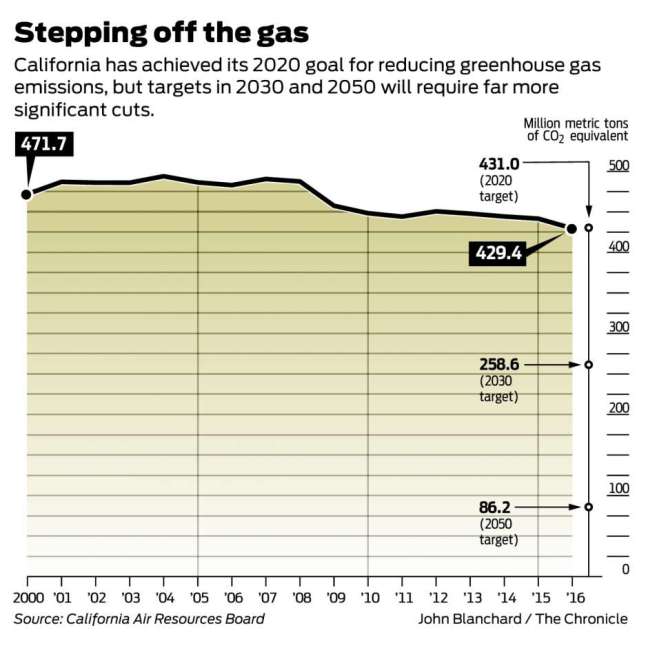
California’s commitment to set goals to limit emissions output is paying dividends. The state appears to have hit its first target for cutting greenhouse gases and it reached the goal 4 years early.

Data released Wednesday by the California Air Resources Board show that the state’s greenhouse gas emissions dropped 2.7 percent in 2016  the latest year available to 429.4 million metric tons. That’s slightly below the 431 million metric tons the state produced in 1990. California law requires that the state’s emissions, which peaked in 2004, return to 1990 levels by 2020. They have a blueprint, goals and a culture to make positive change towards the climate. They have a blueprint, goals, a culture and leadership paving the way utilizing renewable energy to do so.

Cali-Greenhouse-gas-emissions.png

The emissions drop in large part reflects California’s fast rising use of renewable power. (Yessss!!!!)  Solar electricity generation, both from rooftop arrays and large power plants, grew 33 percent in 2016, according to the air board. Imports of hydroelectric power jumped 39 percent as rains returned to the West following years of drought. Use of natural gas for generating electricity, meanwhile, fell 15 percent. What does this all mean? Essentially, California is improving it’s air quality, moving into a new economy of growth and keeping it’s environment in tact for future generations.  This isn’t the end of it, they have goals to reduce emissions 40% by the year 2030.  The complete list of data across different emission sources is found on their website www.arb.ca.gov 

Call us at 480.636.0321 to learn how to lower your carbon footprint, activate your sustainability plan and lower your operating costs with solar electricity.