Looking for back up or emergency power for your grow?
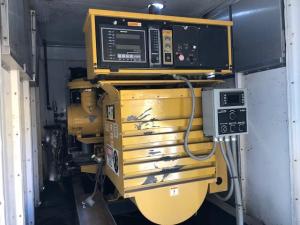
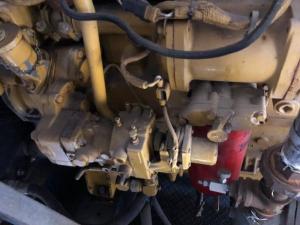
We have this mobile natural gas generator with 858 hours use since it’s overhaul. Good used unit that comes with a parts & labor warranty. We can design this unit into our micro grid application of solar PV, battery storage and generators. The PV solar & battery are both eligible for the Federal Investment Tax credit (ITC) 26% of the project cost. Alternatively, if you have some critical backup or emergency power needs this is a mobile unit that can be modified to fixed for your operation.
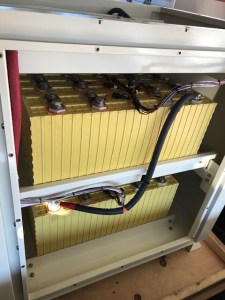
We have some available inventory on hand of lithium Ion Batteries that are intended for a solar KW demand or photovoltaic (PV) solar application.
Description of Battery Equipment:
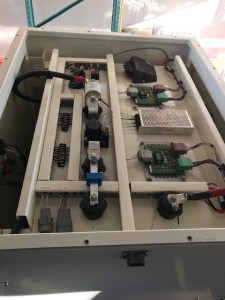
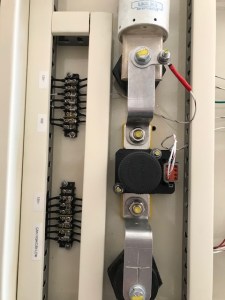
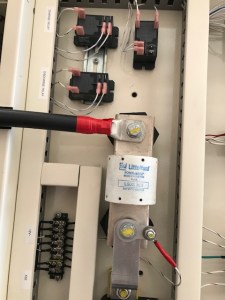
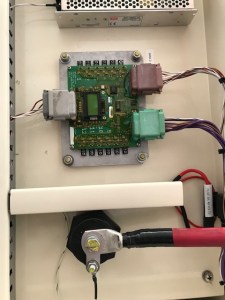
BMS system with 800 A Fuse, Contactor | Current sensor Contactor connected to Under Voltage [UV] and Over Voltage [OV] Warning and Fault | Audible Buzzer for Warnings. Cell Voltage Display | Multiplexer with CAN BUS J1939 and CAN OPEN with additional digital out for accessory controls with Quantity 3 enclosures connected in parallel.
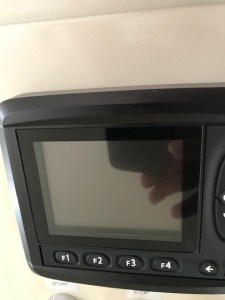
Nominal Capacity : 52 Kwhr Three (3) 52 Kwhr Energy Storage Systems – Lithium batteries 48 Volts connected in series. Pack Voltage Nominal 48 VDC; Pack Voltage Peak 60 VDC; Cycle life 3000 Cycles; Includes Battery Management system, CAN Bus monitoring of temperature and voltage control. Includes programmable master control display.
Battery Type : Lithium Iron Phosphate
Battery Voltage : 48 Volt DC | 16 cells connected in series
Earlier this year, Arizona legalized the growing of Hemp as an agricultural product. That’s a huge benefit to the Arizona economy for future revenue generation and with sustainable farming methods may become a cash crop. While it’s exciting news it will be a challenging row to hoe. Having the proper genetics will be important for growing a successful crop here in this climate. Climate in Arizona is varied so multiple plants and derivative products will be realized depending on where you are growing.
Below is the SB1098 and it’s framework.
ARIZONA STATE SENATE
Fifty-Third Legislature, Second Regular Session
AMENDED
FACT SHEET FOR S.B. 1098
industrial hemp; licensing
Purpose
Authorizes industrial hemp production, processing, manufacturing, distribution and commerce conducted by licensed growers, harvesters, transporters and processors.
Background
Established in 1990, the Arizona Department of Agriculture (AZDA) promotes: 1) farming, ranching and agribusiness; 2) commerce, consumers and natural resources; and 3) the well-being of people, plants, animals and the environment. According to the AZDA, Arizona’s agriculture industry supports 77,000 jobs and generates $17 billion in economic activity (AZDA FY 2016 Annual Report). The Director of the AZDA (Director) ensures agency coordination and cooperation to achieve a unified policy of administering and executing all responsibilities (A.R.S. § 3-107).
The Agricultural Act of 2014, or the 2014 Farm Bill, allows universities and state departments of agriculture to begin cultivating industrial hemp for limited purposes. The law allows universities and state departments of agriculture to grow or cultivate industrial hemp if:
1) the industrial hemp is grown or cultivated for purposes of research conducted under an agricultural pilot program or other agricultural or academic research; and
2) the growing or cultivating of industrial hemp is allowed under the laws of the state in which
such institution of higher education or state department of agriculture is located and such research
occurs.
The U.S. Department of Agriculture, in consultation with the U.S. Drug Enforcement Agency and the U.S. Food and Drug Administration, released a Statement of Principles on Industrial Hemp in the Federal Register on August 12, 2016, to inform the public on the applicable activities related to hemp in the 2014 Farm Bill. According to the National Conference of State Legislatures, at least 34 states have passed legislation related to industrial hemp. Generally, states have taken three approaches: 1) establishing industrial hemp research and/or pilot programs; 2) authorizing studies of the industrial hemp industry; or 3) establishing commercial industrial hemp programs. Twenty-one states have passed laws allowing research and pilot programs, 16 states have legalized industrial hemp production for commercial purposes and 10 states have approved the creation of both pilot/research and commercial programs.
There is a fiscal impact to the state General Fund of $750,000 in FY 2020. The amount of $250,000 and 3 FTE positions is appropriated to the AZDA Plant Services Division, and $500,000 is appropriated to the AZDA. This bill may also generate additional revenues for the state General Fund from Transaction Privilege Taxes levied on industrial hemp transactions.
Provisions
Industrial Hemp Legalization
Authorizes the propagation, processing, manufacturing, distribution and market research of industrial hemp in this state under a preapproved agricultural pilot program (program).
Authorizes commercial industrial hemp production, processing, manufacturing, distribution and commerce outside of the program if authorized under federal law.
Designates industrial hemp as an agricultural product that is subject to regulation by the AZDA.
Requires hemp seed to be certified through the AZDA in order to be authorized for use in the program.
States that unauthorized hemp seed may not be planted.
States that hemp seed derived from previously authorized hemp seed is considered authorized.
Requires the Director to adopt rules for the licensing, production and management of industrial hemp and hemp seed and set fees to recover the cost of licensing, testing, inspecting and supervising industrial hemp production.
Requires the Director to authorize qualified applicants to propagate, harvest, transport or process industrial hemp according to rules adopted by the Director.
Declares the Legislature’s finding that the development and use of industrial hemp can improve the economy and agricultural vitality of the state and that the production of industrial hemp can be regulated so as not to interfere with strict regulation of marijuana.
Licensing
Requires a grower, harvester, transporter, or processor to apply for and obtain an industrial hemp license (license) from the AZDA.
Specifies that a license is valid for one year, and may be renewed as provided by the AZDA.
Provides for the renewal of a license every two years if a licensee pays twice the amount of the fee schedule as established by rule and complies with any annual reporting requirements.
Allows the AZDA to revoke or refuse to issue or renew a license for a violation of any state or federal law, or any rule adopted by the Director.
Requires applicants to provide proof of a valid fingerprint clearance card to the AZDA for the purpose of validating applicant eligibility.
Requires the Department of Public Safety to conduct fingerprint background checks on license applicants.
Specifies that a member of an Indian tribe may apply for a license, and a member that is issued a license is subject to the same prescribed requirements.
Stipulates that license application and renewal forms will be on a form prescribed by the AZDA and accompanied by a fee set by the Director.
Requires the Director to deposit license fees into the Industrial Hemp Trust Fund (Fund).
Regulation
Allows the Director to impose a civil penalty of up to $5,000 for a violation of a licensing requirement, term, condition or rule adopted by the Director.
Classifies a violation of a licensing requirement, term, condition or rule adopted by the Director as a class 1 misdemeanor.
Provides an affirmative defense to a licensee, or a designee or agent of a licensee, from any prosecution for the cultivation of marijuana, unless the charge is for possession, sale, transportation or distribution of marijuana that does not meet the definition of industrial hemp.
Exempts a licensee who possesses, uses, sells, produces, manufactures or transports industrial hemp from statute criminalizing the possession, sale, production and transport of marijuana.
Exempts a person who engages in commercial production, processing, manufacturing, distribution or commerce of industrial hemp outside the program from statute criminalizing the possession, sale, production and transport of marijuana if the person’s actions are authorized by federal law.
Requires licensees to maintain records that are open to inspection or audit by the Director or the Director’s designee.
Allows the Director or the Director’s designee to physically inspect an industrial hemp site to ensure compliance and collect samples for analysis by the State Agricultural Laboratory or another certified laboratory.
Allows the AZDA to take corrective action if a sample contains an average tetrahydrocannabinol concentration of more than 0.3% on a dry weight basis or violates any other pesticide law.
Allows the Director or the Director’s designee to possess and transport samples of Cannabis Sativa L. for the purpose of testing eligibility as industrial hemp.
Prohibits transportation of industrial hemp from a site by a person that is not a licensed grower, processor, harvester or transporter or the Director or the Director’s designee.
Requires a person transporting industrial hemp to carry licensing documents proving the industrial hemp was grown by a licensed grower.
Requires a licensed grower to notify the AZDA of all of the following:
a) the sale and distribution of any industrial hemp grown under the grower’s license;
b) the name and address of the person or entity receiving the industrial hemp; and
c) the amount of the industrial hemp sold or distributed.
Requires the Director to adopt rules and orders to address, correct and remediate violations.
Allows the Director to take the following corrective actions:
a) issue a cease and desist order prohibiting the further sale, processing or transportation of industrial hemp;
b) issue a stop sale order;
c) seize and destroy any noncompliant crop, harvested crop or hemp seed; and
d) take any other action to enforce regulations prescribed by statute and adopted rules and orders.
Allows a person found in violation of prescribed regulations or any adopted to rule or order to request a hearing before an administrative law judge.
Specifies that decision made by an administrative law judge in subject to review by the Director.
Specifies that a request for a hearing does not stay a cease and desist order issued by the Director.
Industrial Hemp Trust Fund
Establishes the Fund, consisting of legislative appropriations, licensing fees and other sources, for the exclusive purpose of implementing, continuing and supporting industrial hemp licensing.
Designates the Director as trustee of the Fund and prohibits commingling of monies other than for investment purposes by the state Treasurer.
Allows the Director to accept and spend federal monies and private grants, gifts, contributions and devises to assist in carrying out licensing activity.
Establishes the Industrial Hemp Program as the beneficiary of the Fund, which includes salaries and fees, and office, administrative, bonding and travel expenses that incurred as a result of the program.
Requires unexpended monies in the Fund at the end of the fiscal year to carry over to the next year rather than divert to the state General Fund.
Definitions
Defines agricultural pilot program as the industrial hemp program that is designed to research the growth, cultivation and marketing of industrial hemp, hemp seeds and hemp products.
Defines crop as any industrial hemp that is grown under a single industrial hemp license issued by the AZDA.
Defines grower as an individual, partnership, company or corporation that propagates industrial hemp.
Defines harvester as an individual, partnership, company or corporation that is licensed by the AZDA to harvest industrial hemp for a licensed grower.
Defines processor as an individual, partnership, company or corporation that is licensed by the AZDA to receive industrial hemp for processing into hemp products or hemp seed.
Defines transporter as individual, partnership, company or corporation that is licensed by the AZDA to transport industrial hemp for a licensed grower or processor.
Defines hemp products as all products made from industrial hemp, including cloth, cordage, fiber, fuel, grain, paint, paper, construction materials, plastics and by-products derived from sterile hemp seed or hemp seed oil, but excludes any product made to be ingested except food made from sterile hemp seed or hemp seed oil.
Defines hemp seed as any viable Cannabis Sativa L. seed that produces an industrial hemp plant that is subject to the rules and orders adopted by the Director.
Defines industrial hemp as the plant Cannabis Sativa L. and any part of such plant, whether growing or not with a Delta-9 tetrahydrocannabinol concentration of not more than 0.3 percent of a dry weight basis.
Defines industrial hemp site as the location in which a grower, harvester, transporter or processor possesses a crop, a harvested crop or hemp seed.
Defines license as the authorization that is granted by the AZDA to propagate, harvest, transport or process industrial hemp in Arizona.
Defines licensee as a grower, harvester, transporter or processor with a valid license.
Miscellaneous
Appropriates in FY 2020 the amount of $250,000 and three full-time equivalent positions to the AZDA’s plant services division, as well as $500,000 to the AZDA.
Requires the Director to establish an Industrial Hemp Advisory Council (Council) to assist with the following:
a) advise the Director regarding expenditures from the Fund; and
b) provide additional assistance as the Director deems necessary.
Requires the Director to appoint five members, including one public member, to the Council.
Exempts the AZDA from rulemaking requirements for one year after the general effective date of the Fifty-third Legislature, Second Regular Session.
Makes conforming changes.
Becomes effective one year after the general effective date of the Fifty-third Legislature, Second Regular Session.
Amendments Adopted by Committee
Modifies the powers of the Director relating to the oversight of noncompliant industrial hemp.
Specifies that the $500,000 appropriation is allocated to the AZDA, rather than the AZDA laboratory.
Establishes the Industrial Hemp Advisory Council.
Amendments Adopted by Committee of the Whole
Adds an exclusion to the definition of hemp products.
A sterile windowless room glows with the light of 32 high-pressure sodium bulbs. For 12 hours a day, the light shines down upon meticulous rows of about 260 flowering cannabis plants.
This is one of the flowering rooms at Canndescent, a Desert Hot Springs cannabis business that operates several cultivation facilities. The company has the dual distinction of being the first municipally permitted cannabis cultivator in California, and the first in the industry to embrace commercial-scale solar.
Canndescent’s CEO Adrian Sedlin said the solar project, which consists of more than 700 solar modules set up on carports, offsets about 30% of the energy used at the facility. The operation allows Canndescent to sell energy back to the utility, while also providing shade and cooling on the property itself.
Plus, many cannabis consumers desire a green product, Sedlin said.
“It was an absolute alignment of our internal values with the values of our consumers,” Sedlin said.
Cannabis cultivation generated the carbon emission equivalent of 92,660 cars in 2017. That figure is likely to increase as the legal market expands – 33 states already allow use in some form.
But the nascent industry also presents an opportunity to implement alternative energy processes and build a sustainable farming sector from the ground up.
Derek Smith, a cannabis sustainability expert with Resources Innovation Institute, said companies have yet to embrace sustainable practices on a large scale. But the seeds have been planted.
“I’ve never seen a bigger opportunity for an individual industry to make a positive leap from a highly carbon-intensive model to a low-carbon model,” Smith said. “We truly have the opportunity. We actually can show the world a model of sustainable commerce.”
How much energy does it take to grow cannabis?
The energy needs of cannabis cultivation already have presented challenges for municipalities and utilities as more states move to legalize. Oregon saw cultivation-related outages in 2015, shortly after recreational marijuana was legalized, leading officials elsewhere to ponder the need for additional substations, or how to keep their grids alight in the face of increased usage.
In the Southern California Edison service area encompassing the western side of the Coachella Valley, cannabis cultivation facilities use about 235 megawatts a day, or the equivalent of about 100,000 California homes.
System-wide, daily energy use ranges from about 10,000 to 11,000 to as much as 20,000 to 22,000 megawatts, depending on the seasons. That means the energy used by cannabis cultivation facilities could represent 1-2% of overall usage.
In Desert Hot Springs, now home to about 10 dispensaries and 23 cultivation, manufacturing or distribution projects, Mayor Scott Matas said initially there were concerns about whether the SCE grid could support the added load.
But as the facilities have gotten grows underway, some have found ways to limit usage to save energy and money — like Canndescent’s solar panels, or the implementation of LED lights, Matas said.
“If you could go to Las Vegas and see the lights that are used there, and the power that’s used there, I think they can find power to power up our industrial area here with no problem,” Matas said.
At Canndescent, the solar offset allows the company to sell energy back to SCE and recoup money on its energy bills. For its indoor grow facility, the bill could be around $30,000 a month without solar. Since the new solar project that came online in March 2019, the bill is about $12,000, Sedlin said.
Canndescent also takes advantage of an agricultural discount through SCE, which knocks 20% off of the energy costs.
Indoor vs. outdoor grows
Mike Rowe is the vice president of MSA Consulting, a Rancho Mirage civil engineering firm that’s worked with cannabis cultivation businesses on permitting, site design and other planning needs. He said indoor cannabis cultivation facilities generally use about 25 times what a standard industrial development may need.
“We’ve found that they all have their special way of growing, but there is a pretty consistent demand for the power they need,” Rowe said.
Sophisticated indoor grow facilities deploy climate control systems to keep the temperature consistent and humidity in check. The facilities often have ventilation systems and large overhead fans that frequently run to control air flow.
Perhaps most crucially, plants need extensive lighting systems to replicate the sun’s intensity. Bulbs can run for 12 to 18 hours a day, depending on what point in the life cycle the plant is at.
The benefit of the tightly controlled indoor environment is a carefully crafted product that’s been spared the wildcards of weather and pests, ultimately yielding a better output.
“When you grow outside, you can’t get as many crops as you can in a controlled environment inside,” Rowe said.
Rooms are also outfitted with automated temperature and climate controls, which helps cut down potential wasted energy and helps the plants thrive.
A few streets away, Canndescent operates a greenhouse cultivation facility which yields cannabis sold at a lower price point under the name Good Brands.
The mixed-light greenhouse facility incorporates the plentiful sunlight of Southern California, limiting the energy usage from the facility. And the dry desert climate also can work in a grower’s favor due to decreased humidity— the greenhouse also uses an evaporative cooling wall that can chill the facility by 35 degrees. It also doesn’t require the same HVAC or carbon dioxide implementation systems that are used in the indoor facility.
“It’s a much more cost-effective approach, less carbon footprint, but we can still produce beautiful cannabis at the same time,” said Tom Williamson, Canndescent’s operations manager.
Outage woes and cottage grows
While commercial-scale industrial grows run up five-figure electric bills, smaller cannabis grows can also stress power systems.
Kevin Short is the general manger of the Anza Electric Cooperative, which provides power to nearly 700 square miles in Riverside County. The mountainous high country area has long been a haven for cannabis growers, many of whom operated under the medical usage lawsthat preceded recreational cannabis legalization through the Proposition 64 ballot initiative in 2016.
While there aren’t commercially licensed indoor industrial-sized grows on the co-op’s grid, a Riverside County ordinance allows qualified patients to grow 12 plants, or 24 plants for two patients on the same premises.
But in the post-Prop 64 era, Short said the system has seen an increase in overloads on the transformers.
“Growers will move into an area or into a service location, not tell us how much load they’re adding onto the system, and eventually overload the transformer,” he said.
Repairs can cost the co-op precious time and money. He recommends anyone who plans to start growing in the area run the plans by the co-op so they can be sure to support the service.
Jazmyn McCammon, a board member of the High Country Growers Association who gets power from the co-op, grows 12 plants that she mostly gives away and makes solvents with.
Her operation is as natural as it gets: Plants are watered with a closed-loop system that avoids drawing well water, and she creates plant food out of fermented herbs from a garden.
She said she tries to be “a good neighbor” when it comes to power usage: that means running the lights during off-peak hours, like midday or the middle of the night.
“We go around that (peak hours) whenever we do use our lights and our power,” she said.
McCammon likes to think of the emerging cannabis industry to the beer industry: there are both large domestic brewers, and craft breweries with specialty products. And she sees California as a place where the omnipresent sun could contribute to off-grid solar-powered properties, and outdoor grows, should they be permitted.
But the area is also becoming a hotbed of enforcement: Sheriff Chad Bianco has prioritized cracking down on illegal grow operations, with deputies linking some operations to increased criminal activity and organized crime.
McCammon is concerned that Riverside County is punishing law-abiding growersby not permitting legal operations fast enough, and restricting methods of cultivating.
“The ultimate answer is outdoor growing,” she said.
Building a future on alternative energy
Smith, the sustainability expert from RII, said more data is needed to determine the most efficient set of indoor environmental conditions for a grow environment.
While some technology that could use less energy is becoming more common-place — like LED lights that could use 40% less energy than other bulbs — such improvements won’t make a difference if inappropriately used, Smith said.
“We’re seeing the opportunity of increased efficiency being left on the table, and it’s primarily because everybody needs more data to guide their decision-making,” Smith said. “This whole phenomena of growing plants in buildings is new to everyone.”
As more states move to legalize, they’re finding new ways to address energy use. In Illinois, where legalization will take effect in 2020, lawmakers this year approved a plan to set limits on how much electricity and water cannabis cultivators can use.
Canndescent’s CEO Sedlin said more cannabis facilities would be able to make sustainability-related improvements if the cannabis industry had access to traditional banking.
Even though dozens of states have legalized access to cannabis in some form, it’s still illegal to possess or sell it under federal law. That means banks who take in money associated with cannabis sales could be at legal risk.
“For us this was a priority, so we made it happen and we were able to secure private loans,” he said.
Changes could be coming soon; the Secure And Fair Enforcement Banking Act would protect banks that work with state-compliant cannabis businesses from federal penalties. It passed the Democrat-controlled House of Representatives in late September and still must go through the Republican-controlled Senate.
Sedlin said banking reforms are necessary for companies in the cannabis space who want to make big investments in alternative energy. While the solar offset is valuable for the company and, as Sedlin puts it, “the right thing to do,” private financing comes at a hefty cost that not all companies can swallow.
“I’m paying double digits (for interest rates),” Sedlin said. “It’s a joke. But again, it’s the right thing to do … Our consumers know we’re serious about being a positive force. Our company name, Canndescent, means to project light, and we’re very serious about doing that top to bottom in the company.”
This story was originally authored by Melissa Daniels at https://www.desertsun.com/ Melissa covers business and real estate in the Coachella Valley. She can be reached at (760) 567-8458 or melissa.daniels@desertsun.com. Follow Melissa on Twitter @melissamdaniels
Oregon, Massachusetts and Illinois are among states taking steps to regulate energy use, according to a new report
This Monday, May 20, 2019 photo shows a mature marijuana plant beginning to bloom under artificial lights at Loving Kindness Farms in Gardena, Calif. (AP Photo/Richard Vogel)
Cannabis cultivation in the United States this year will consume 1.8 million megawatt-hours of electricity, about as much as the nation’s 15,000 Starbucks stores.
And next year it’ll be even more, according to a report from analytics firm New Frontier Data estimating just how much power it takes to produce the nation’s cannabis crop.
Yet even as they’ve welcomed it into the regulatory fold, states legalizing cannabis so far have done little to limit or even track the huge amounts of energy needed to grow it indoors. Among the 11 states to permit recreational use of cannabis, only Massachusetts and now Illinois, which did so this week, have included energy-efficiency standards for indoor cultivation, a practice that requires nearly nonstop use of lights and various heating, ventilation and air conditioning systems.
One other state, Oregon, requires simply that growers estimate and then report back on their energy use. Even this small step will help regulators there and in other states to better manage an industry whose electricity demand has long been kept as hidden as its product, says report co-author Derek Smith of Resource Innovation Institute, a nonprofit organization that promotes resource conservation in the cannabis industry.
“This is critically important, and every state should consider that,” Smith told FairWarning. “This industry has very little data historically because growers were concerned about sharing information about how they were using energy because they were hiding from the law.”
The report’s estimate of massive power demand includes only the legal stuff, both medical and recreational. Add in illicit production–some of it likely to become legal as more states authorize pot growing–and electricity use nearly triples.
Meanwhile electricity use also continues unchecked in most cannabis-legal states including California, the world’s largest cannabis market and producer of the majority of the nation’s crop. Its Bureau of Cannabis Control won’t begin asking cultivators for data on energy use until 2022, and hold them to statewide standards for renewable energy starting in 2023.
“It’s a marathon,” says Josh Drayton of the California Cannabis Industry Association, a trade group. “But the more that these issues get brought to the table, the more involvement from energy suppliers and from the industry, the more data and research that can be put out there — that’s really what’s necessary to bring change.”
Using data reported privately by 81 cultivators in nine states, the report’s authors calculated that among the three main methods of cannabis cultivation, indoor accounts for at least 60 percent of all electricity use.
Greenhouse cultivation, which requires less lighting but still involves heating, cooling and ventilation, consumes about 37 percent of the total. Outdoor farming represents the remainder, less than 3 percent.
The authors estimate it takes 18 times more power to grow a gram of cannabis indoors than outdoors. Yet for a variety of reasons including quality control, safety and security concerns, and nuisance issues related to odors and nighttime lighting, outdoor cannabis cultivation isn’t ideal everywhere, says Beau Whitney, a senior economist with New Frontier Data.
Massachusetts is one of those places, due in part to its climate and population density. But state regulators still encourage outdoor growing through discounted license fees for the express purpose of reducing energy demand, notes Sam Milton of Climate Resources Group, a Boston-based consulting firm that has partnered with Resource Innovation Institute.
For indoor growers, Massachusetts’ rules cap power use on lighting at 36 watts per square foot of plant canopy, or 50 watts per square foot for smaller operations.
In Illinois the new law signed this week by Gov. J.B. Pritzker, is even stricter, applying the limit of 36 watts per square foot to all indoor farms, regardless of size.
Both states effectively prohibit the use of any lighting technology that draws more power than efficient light-emitting diodes, or LEDs, Milton says. Though more expensive than standard high-pressure sodium lamps, LEDs last longer and can reduce electricity usage by 40 percent.
The two states also have energy-reporting requirements similar to Oregon’s.
The emerging industry is already confronted with a patchwork of state-level regulations governing pesticides and other potential contaminants including metals, microbes, and solvent residues. In the case of electricity use, Milton says he believes a better alternative will be for the U.S. Department of Energy to aid the industry in developing new standards and efficiency measures.
“These facilities are so energy-intensive, and they’re proliferating, and they’re largely unregulated. I see that sector as something that really needs a lot of attention,” he says. “Without the feds coming in and providing that overarching support, it’ll have to be a state-by-state basis, which is kind of clumsy.”
This story was originally written & produced by FairWarning (www.fairwarning.org), a nonprofit news organization based in Southern California that focuses on public health, consumer, job safety and environmental issues.













 Canna Solar