Answers to Questions on Commercial PV Solar from an Industry Perspective


1. What is the business case for commercial PV solar?

Answer: Commercial PV solar is a long term operating cost control and energy risk management asset for a business. It reduces purchased kWh, hedges against future utility rate increases, supports sustainability goals, and creates an owned energy asset with a 25+ year useful life. Financial incentives and depreciation improve the economics of the investment. Each business case is different and, in some cases, it may not work for an organization. 

2. What are the financial benefits of installing solar for a commercial business?

Answer: The main financial benefits are reduced utility energy purchases, potential federal tax credit value (currently sunsetting), depreciation benefits, utility or state incentives (where available), and long term savings by producing electricity onsite. The value depends on load profile, utility rate plan structure, installation cost, tax appetite, incentive availability and financing. It’s not always a good fit for every business. It depends on your situation. 

3. What are the non financial benefits of commercial solar?

Answer: Non financial benefits include sustainability leadership, lower emissions (important when you are in an emission control district), customer and stakeholder goodwill, energy independence, and the ability to prepare for future batteries, EV charging, or an onsite microgrid for resilience. Solar can also help meet corporate Environmental Social Governance, supplier, or public sector CO2 energy reduction goals if they have been set or mandated.

4. How does solar reduce utility electricity costs?

Answer: Solar reduces utility costs by generating electricity onsite that offsets kWh otherwise purchased from the utility. The savings are strongest when solar production lines up with daytime business loads and when exported energy is credited at a favorable rate. When paired with batteries it can further reduce operating costs for utility KW demand fees. Depending on the utility rate plan structure versus the cost of the investment determines if the case for investment should be made.  

5. How does solar reduce exposure to future utility rate increases?

Answer: Each kWh produced by the solar system is a kWh the business does not buy from the utility, so the owner is partially insulated from future energy rate escalation. This hedge is valuable because the solar system cost is largely fixed upfront while utility rates and riders can change over time.

6. What types of businesses benefit most from solar?

Answer: Businesses with high daytime electrical consumption, large roofs or land, long term site control, and the ability to use tax benefits usually benefit most. In some situations, the value of solar shade structures can drive investment i.e. solar covered car parking, diminished water evaporation, agri photovoltaics, etc. Examples include manufacturing, warehouses, cold storage, schools, public facilities, tribal facilities, agricultural operations, and fleet depots.

7. What industries are adopting commercial solar?

Answer: Common adopters include manufacturing, logistics, agriculture, education, healthcare, municipalities, tribal governments, retail centers, water and wastewater facilities, and fleet operators. Adoption is strongest where utility electricity costs are high, site control is long term, and the organization values energy cost predictability, independence and resilience. The biggest driver of adoption is the leadership in an organization. It’s generally a decision of economics, independence, resilience or carbon offset/ reduction. 

8. What are the risks of not installing solar?

Answer: Risks include continued exposure to utility rate increases, missed incentive windows, inability to control a portion of energy costs, and falling behind customer or stakeholder sustainability expectations. Delaying may also reduce access to tax credits, rebates, grants, or favorable interconnection capacity when these are available. In some cases, the risk is minimal, this is especially true if renewables are not an achievable investment whether its due to space, energy load or a financial ROI period based on an organization’s acceptable standards. Each business case is different. 

9. How does solar support sustainability or ESG goals?

Answer: Solar supports sustainability goals by reducing grid electricity purchases and the emissions associated with operations. It also creates measurable data for Environmental Social Governance reporting, including annual kWh production, estimated avoided emissions, and progress toward renewable energy targets.

10. How does solar improve energy independence?

Answer: Solar improves energy independence by allowing a facility to produce part of its electricity onsite. Solar alone generally does not provide backup power during a grid outage unless it is paired with batteries, a generator, transfer equipment, and controls that allow safe islanded operation. Grid connected solar systems (in most cases they are all grid connected) will shut down when there is a utility power grid loss. This is to ensure the solar system does not back feed into the grid. It ensures safety for line workers and allows the utility to more easily address the issue causing the outage. If you want electricity from your solar system during an outage a battery is necessary regardless if it is the day or night. 

11. How is a commercial solar system sized?

Answer: A commercial solar system is sized by reviewing annual and interval load data, available roof/land area, utility rate structure, interconnection limits, export rules, budget, and owner goals. The best size is usually the system that maximizes useful onsite energy value rather than simply maximizing nameplate capacity. Each situation is unique to itself and all of these factors need to be considered to identify if it is appropriate for a business to adopt or not. 

12. How much roof or land area is needed for solar?

Answer: Area depends on module wattage, racking type, access pathways, setbacks, tilt, row spacing, and site constraints. The best answer is identify the overall site load can be offset with the available space and is justified by the investment. 

13. What is the difference between kWdc and kWac?

Answer: kWdc is the direct current nameplate capacity of the PV modules; kWac is the alternating current output capacity of the inverters. The DC size is usually larger than the AC size because modules rarely operate at nameplate output continuously. This is pretty technical and, in most cases, not important to know for a business owner to fully understand. It’s generally conversation for the contractor, engineer and utility but sometimes people ask. 

14. What is the typical DC/AC ratio for commercial solar?

Answer: The DC/AC ratio compares PV module capacity to inverter capacity. Commercial and utility systems often use ratios around 1.2 to 1.4, but the optimal ratio depends on climate, clipping tolerance, inverter cost, interconnection limits, and production goals. It’s another technical conversation among designers and engineers that isn’t relevant to most decision makers but its good to understand what it means if it ever comes up in conversation. 

15. What is the expected annual production from a commercial PV system?

Answer: Expected annual production is estimated with solar modeling software using weather data, module orientation, tilt, shading, losses, inverter capacity, soiling, degradation, and availability. Results are commonly reported as kWh/year and specific yield in kWh/kWdc. The benefit of PV solar is predictability over time. Cloudy or rainy days have an impact on production so does shade or dust build up as well as PV module degradation. All of these need to be considered in the equation for output. In general terms solar production is a long term game and if your self producing then you’re going to see benefit. Solar systems are like any other piece of equipment they diminish in output over time but system maintenance ensures operability and production over time 

16. How does shading affect PV output?

Answer: It absolutely affects output negatively. Trimming trees or vegetation around systems is a must. Designing a system to mitigate or avoid shading is the standard of a good design. 

17. What is the difference between rooftop, carport, and ground-mounted solar?

Answer: Apart from the obvious answers on the structure type if you have a choice then the lowest cost option in order are ground mount, then rooftop and finally carport (shade structure). However, there are benefits to each and depending on budget, goals and intention for revenue (fee to park under shade structure) then the approach for the business for adoption may be different. 

18. How does single axis tracking compare to fixed tilt solar?

Answer: In terms of PV solar output trackers are much more advantageous. Fix tilt ground mounts are becoming less and less the choice for install in large PV installations. Small scale installations will most likely be fixed tilt. The upside to fixed tilt is that O&M costs are much less since trackers have moving parts that wear out or fail. However, the cost benefit analysis of the project opportunity always includes an O&M factor. 

19. What is the useful life of a PV system?

Answer: Commercial PV systems are commonly planned for 25 to 35 years of operation. (I know of and witnessed systems being online producing past +20 years in the field in Arizona) Modules degrade gradually, inverters can fail in time, and some balance of system components (wiring, connections, etc.) may require replacement during the life of the system. In general terms, as long has the installer has best practices in place for design and installation the system will have minimal failures. Maintenance is required for manufacture warranties, longevity and maximum output. There is a difference between PV solar module manufacturers’ quality of equipment and the same is true with inverters. Working with a professional that has years of experience is valuable when choosing good equipment.  

20. How much maintenance does a commercial solar system require?

Answer: A regular schedule is a must. Our service agreements layout a two year site visit schedule to inspect, check tolerances, clean equipment etc. Modern systems having online monitoring portals that provide detailed production output data that allows you to keep an eye on the system. However, you still need to have technicians do site visits to be proactive on maintenance. They use the monitoring data to pinpoint issues on the system which helps reduce time in the field. 

21. What is the current cost per watt for commercial solar?

Answer: Installed cost depends on system size, mounting type, equipment selection, labor, interconnection, civil work, permitting, utility upgrades, and tariffs. Pricing changes especially when we see bottle necks in supply, tariffs or incentives being applied or sunsetting away. In general terms the overall cost of installed renewable energy generation systems continues to decrease. Renewable energy technologies continue to improve in output, availability, technology, lean manufacturing, global adoption and this has benefited the investor. Each situation is different but in general if the cost to install and operate a PV solar system was not feasible or financially advantageous then there wouldn’t be a growing global industry built around the technology. 

22. What is the installed cost of rooftop solar versus ground mount solar?

Answer: It depends on a number of factors that need to be included in a cost analysis to determine the answer. It constantly changes like every other construction project you evaluate as an investment. However, in general terms if you have space a ground mount system typically costs less. 

23. What is the payback period for commercial solar?

Answer: Great question, the answer depends on your situation. A proper ROI analysis include utility rates, degradation, O&M, tax benefits, financing, replacement costs, and escalation assumptions. In general terms, we have answers that support an installation type specific to a rate plan which is specific to a utility. Its not too hard for us to provide an answer but we always look at opportunities on case by case basis. 

24. What is the levelized cost of energy for solar?

Answer: LCOE is the lifetime cost of producing electricity divided by lifetime energy production, usually expressed in $/kWh. It is useful for comparing solar to utility energy costs, but it does not fully capture demand charges, resilience, tax timing, or financing structure. Again, it’s specific to construction costs of the project versus output expectancy of the system. 

25. How do tax credits affect solar ROI?

Answer: Tax credits always improve ROI. The Inflation Reduction Act was full of tax credits created to further incentivize renewable adoption in the US. The One Big Beautiful bill deconstructed those incentives. The result is that adoption will slow versus its previous potential with incentives that would have been in place. However, the industry must adapt to become more efficient, cost effective and creative to continue to grow. The truth is that governments always incentivize energy production. Fossil fuels are much older form of technology that is more firmly established with a +100-year head start and absolute global adoption. The future is a mix of both renewable and non renewable energy generation to power our needs for energy. 

26. How do depreciation benefits affect solar ROI?

Answer: It depends on which accounting practice you use in your calculation. Commercial solar, storage, and charging equipment may qualify for depreciation benefits depending on ownership and tax rules. In PV solar there is a 100% Bonus Deprecation that can be applied to the asset. The value calculation depends on basis, bonus depreciation availability, MACRS classification, taxable income, and tax advisor review of the business financial situation to correctly calculate this.

27. How does utility rate structure affect solar savings?

Answer: Each rate plan is different which makes the opportunity for PV solar different for a system owner. To make PV solar advantageous versus the utility (which may be delivering PV solar generated energy to your meter) the overall cost of the electricity you generate on your system must be less than the current cost you pay to purchase it from a utility. It’s about the lowest cost of energy today at the point in time of installation of the system. In time, over the life of the system the cost to produce energy should continue to be less and increase the cost savings as utility rates typically increase. Utilities sometimes change their rate structures which changes the value proposition of self generation of PV solar. In general terms, utility kWh rates don’t decrease but it is possible. Anything is possible. It’s not likely. 

28. How do demand charges affect solar economics?

Answer: Solar may reduce demand charges if its output coincides with the customer monthly peak, but the reduction is not guaranteed. Batteries are required to significantly reduce demand charges. If loads are constant and predictable then load management is predictable because they can discharge during peak intervals or the most cost effective time frame.

29. What is the expected O&M cost for commercial solar?

Answer: Maintenance includes annual telecom subscription fees (monitoring), visual inspections, vegetation control, inverter service, torque checks, thermal scans, cleaning where justified, and corrective maintenance. A sound O&M plan properly accounts for these and should include a percentage cost increase over time that accounts for inflation. 

30. How does inflation affect long term solar value?

Answer: Inflation in PV solar systems needs to be accounted for like inflation in any other business cost calculation. Typically, its going to be applied to two categories in the calculation for value proposition. First, the cost of assumed utility electricity over time and the cost to maintain the system over time. Historically, we’ve seen the cost of power electronics and PV modules decrease so if there is equipment that needs to be replaced outside of a MFG warranty the historical trend has worked in favor of the asset owner.

31. Is there a cost associated with project evaluation?

Answer: In general terms no but it depends on the project and the level of analysis being performed. If environmental or land studies need to be done, then yes. However, we typically are able to evaluate most projects at no cost and provide answers to clients to help them understand their opportunity. 
A model of sustainable commerce, carbon footprint, grid concerns push SoCal weed industry to be more green

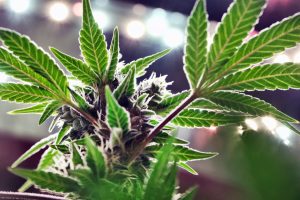
A sterile windowless room glows with the light of 32 high-pressure sodium bulbs. For 12 hours a day, the light shines down upon meticulous rows of about 260 flowering cannabis plants.

This is one of the flowering rooms at Canndescent, a Desert Hot Springs cannabis business that operates several cultivation facilities. The company has the dual distinction of being the first municipally permitted cannabis cultivator in California, and the first in the industry to embrace commercial-scale solar.

Canndescent’s CEO Adrian Sedlin said the solar project, which consists of more than 700 solar modules set up on carports, offsets about 30% of the energy used at the facility. The operation allows Canndescent  to sell energy back to the utility, while also providing shade and cooling on the property itself.

Plus, many cannabis consumers desire a green product, Sedlin said.

“It was an absolute alignment of our internal values with the values of our consumers,” Sedlin said.

Cannabis cultivation generated the carbon emission equivalent of 92,660 cars in 2017. That figure is likely to increase as the legal market expands – 33 states already allow use in some form.

But the nascent industry also presents an opportunity to implement alternative energy processes and build a sustainable farming sector from the ground up.

Derek Smith, a cannabis sustainability expert with Resources Innovation Institute, said companies have yet to embrace sustainable practices on a large scale. But the seeds have been planted.

“I’ve never seen a bigger opportunity for an individual industry to make a positive leap from a highly carbon-intensive model to a low-carbon model,” Smith said. “We truly have the opportunity. We actually can show the world a model of sustainable commerce.”

How much energy does it take to grow cannabis?

The energy needs of cannabis cultivation already have presented challenges for municipalities and utilities as more states move to legalize. Oregon saw cultivation-related outages in 2015, shortly after recreational marijuana was legalized, leading officials elsewhere to ponder the need for additional substations, or how to keep their grids alight in the face of increased usage.

In the Southern California Edison service area encompassing the western side of the Coachella Valley, cannabis cultivation facilities use about 235 megawatts a day, or the equivalent of about 100,000 California homes.

System-wide, daily energy use ranges from about 10,000 to 11,000 to as much as 20,000 to 22,000 megawatts, depending on the seasons. That means the energy used by cannabis cultivation facilities could represent 1-2% of overall usage.

In Desert Hot Springs, now home to about 10 dispensaries and 23 cultivation, manufacturing or distribution projects, Mayor Scott Matas said initially there were concerns about whether the SCE grid could support the added load.

But as the facilities have gotten grows underway, some have found ways to limit usage to save energy and money — like Canndescent’s solar panels, or the implementation of LED lights, Matas said.

“If you could go to Las Vegas and see the lights that are used there, and the power that’s used there, I think they can find power to power up our industrial area here with no problem,” Matas said.

At Canndescent, the solar offset allows the company to sell energy back to SCE and recoup money on its energy bills. For its indoor grow facility, the bill could be around $30,000 a month without solar. Since the new solar project that came online in March 2019, the bill is about $12,000, Sedlin said.

Canndescent also takes advantage of an agricultural discount through SCE, which knocks 20% off of the energy costs.

Indoor vs. outdoor grows

Mike Rowe is the vice president of MSA Consulting, a Rancho Mirage civil engineering firm that’s worked with cannabis cultivation businesses on permitting, site design and other planning needs. He said indoor cannabis cultivation facilities generally use about 25 times what a standard industrial development may need.

“We’ve found that they all have their special way of growing, but there is a pretty consistent demand for the power they need,” Rowe said.

Sophisticated indoor grow facilities deploy climate control systems to keep the temperature consistent and humidity in check. The facilities often have ventilation systems and large overhead fans that frequently run to control air flow.

Perhaps most crucially, plants need extensive lighting systems to replicate the sun’s intensity. Bulbs can run for 12 to 18 hours a day, depending on what point in the life cycle the plant is at.

The benefit of the tightly controlled indoor environment is a carefully crafted product that’s been spared the wildcards of weather and pests, ultimately yielding a better output.

“When you grow outside, you can’t get as many crops as you can in a controlled environment inside,” Rowe said.

Rooms are also outfitted with automated temperature and climate controls, which helps cut down potential wasted energy and helps the plants thrive.

A few streets away, Canndescent operates a greenhouse cultivation facility which yields cannabis sold at a lower price point under the name Good Brands.

The mixed-light greenhouse facility incorporates the plentiful sunlight of Southern California, limiting the energy usage from the facility. And the dry desert climate also can work in a grower’s favor due to decreased humidity— the greenhouse also uses an evaporative cooling wall that can chill the facility by 35 degrees. It also doesn’t require the same HVAC or carbon dioxide implementation systems that are used in the indoor facility.

“It’s a much more cost-effective approach, less carbon footprint, but we can still produce beautiful cannabis at the same time,” said Tom Williamson, Canndescent’s operations manager.

While commercial-scale industrial grows run up five-figure electric bills, smaller cannabis grows can also stress power systems.

Kevin Short is the general manger of the Anza Electric Cooperative, which provides power to nearly 700 square miles in Riverside County. The mountainous high country area has long been a haven for cannabis growers, many of whom operated under the medical usage laws that preceded recreational cannabis legalization through the Proposition 64 ballot initiative in 2016.

While there aren’t commercially licensed indoor industrial-sized grows on the co-op’s grid, a Riverside County ordinance allows qualified patients to grow 12 plants, or 24 plants for two patients on the same premises.

But in the post-Prop 64 era, Short said the system has seen an increase in overloads on the transformers.

“Growers will move into an area or into a service location, not tell us how much load they’re adding onto the system, and eventually overload the transformer,” he said.

Repairs can cost the co-op precious time and money. He recommends anyone who plans to start growing in the area run the plans by the co-op so they can be sure to support the service.

Jazmyn McCammon, a board member of the High Country Growers Association who gets power from the co-op, grows 12 plants that she mostly gives away and makes solvents with.

Her operation is as natural as it gets: Plants are watered with a closed-loop system that avoids drawing well water, and she creates plant food out of fermented herbs from a garden.

She said she tries to be “a good neighbor” when it comes to power usage: that means running the lights during off-peak hours, like midday or the middle of the night.

“We go around that (peak hours) whenever we do use our lights and our power,” she said.

McCammon likes to think of the emerging cannabis industry to the beer industry: there are both large domestic brewers, and craft breweries with specialty products. And she sees California as a place where the omnipresent sun could contribute to off-grid solar-powered properties, and outdoor grows, should they be permitted.

But the area is also becoming a hotbed of enforcement: Sheriff Chad Bianco has prioritized cracking down on illegal grow operations, with deputies linking some operations to increased criminal activity and organized crime.

McCammon is concerned that Riverside County is punishing law-abiding growers by not permitting legal operations fast enough, and restricting methods of cultivating.

“The ultimate answer is outdoor growing,” she said.

Building a future on alternative energy

Smith, the sustainability expert from RII, said more data is needed to determine the most efficient set of indoor environmental conditions for a grow environment.

While some technology that could use less energy is becoming more common-place — like LED lights that could use 40% less energy than other bulbs — such improvements won’t make a difference if inappropriately used, Smith said.

“We’re seeing the opportunity of increased efficiency being left on the table, and it’s primarily because everybody needs more data to guide their decision-making,” Smith said. “This whole phenomena of growing plants in buildings is new to everyone.”

As more states move to legalize, they’re finding new ways to address energy use. In Illinois, where legalization will take effect in 2020, lawmakers this year approved a plan to set limits on how much electricity and water cannabis cultivators can use.

Canndescent’s CEO Sedlin said more cannabis facilities would be able to make sustainability-related improvements if the cannabis industry had access to traditional banking.

Even though dozens of states have legalized access to cannabis in some form, it’s still illegal to possess or sell it under federal law. That means banks who take in money associated with cannabis sales could be at legal risk.

“For us this was a priority, so we made it happen and we were able to secure private loans,” he said.

Changes could be coming soon; the Secure And Fair Enforcement Banking Act would protect banks that work with state-compliant cannabis businesses from federal penalties. It passed the Democrat-controlled House of Representatives in late September and still must go through the Republican-controlled Senate.

Sedlin said banking reforms are necessary for companies in the cannabis space who want to make big investments in alternative energy. While the solar offset is valuable for the company and, as Sedlin puts it, “the right thing to do,” private financing comes at a hefty cost that not all companies can swallow.

“I’m paying double digits (for interest rates),” Sedlin said. “It’s a joke. But again, it’s the right thing to do … Our consumers know we’re serious about being a positive force. Our company name, Canndescent, means to project light, and we’re very serious about doing that top to bottom in the company.”

This story was originally authored by Melissa Daniels at https://www.desertsun.com/ Melissa covers business and real estate in the Coachella Valley. She can be reached at (760) 567-8458 or melissa.daniels@desertsun.com. Follow Melissa on Twitter @melissamdaniels

Most States Legalizing Marijuana Have Yet to Grapple with Energy Demand

Oregon, Massachusetts and Illinois are among states taking steps to regulate energy use, according to a new report

This Monday, May 20, 2019 photo shows a mature marijuana plant beginning to bloom under artificial lights at Loving Kindness Farms in Gardena, Calif. (AP Photo/Richard Vogel)

Cannabis cultivation in the United States this year will consume 1.8 million megawatt-hours of electricity, about as much as the nation’s 15,000 Starbucks stores.

And next year it’ll be even more, according to a report from analytics firm New Frontier Data estimating just how much power it takes to produce the nation’s cannabis crop.

Yet even as they’ve welcomed it into the regulatory foldstates legalizing cannabis so far have done little to limit or even track the huge amounts of energy needed to grow it indoors. Among the 11 states to permit recreational use of cannabis, only Massachusetts and now Illinois, which did so this week, have included energy-efficiency standards for indoor cultivation, a practice that requires nearly nonstop use of lights and various heating, ventilation and air conditioning systems.

One other state, Oregon, requires simply that growers estimate and then report back on their energy use. Even this small step will help regulators there and in other states to better manage an industry whose electricity demand has long been kept as hidden as its product, says report co-author Derek Smith of Resource Innovation Institute, a nonprofit organization that promotes resource conservation in the cannabis industry.

“This is critically important, and every state should consider that,” Smith told FairWarning. “This industry has very little data historically because growers were concerned about sharing information about how they were using energy because they were hiding from the law.”

The report’s estimate of massive power demand includes only the legal stuffboth medical and recreational. Add in illicit production–some of it likely to become legal as more states authorize pot growing–and electricity use nearly triples.

Meanwhile electricity use also continues unchecked in most cannabis-legal states including California, the world’s largest cannabis market and producer of the majority of the nation’s crop. Its Bureau of Cannabis Control won’t begin asking cultivators for data on energy use until 2022, and hold them to statewide standards for renewable energy starting in 2023.

“It’s a marathon,” says Josh Drayton of the California Cannabis Industry Association, a trade group. “But the more that these issues get brought to the table, the more involvement from energy suppliers and from the industry, the more data and research that can be put out there — that’s really what’s necessary to bring change.”

Using data reported privately by 81 cultivators in nine states, the report’s authors calculated that among the three main methods of cannabis cultivation, indoor accounts for at least 60 percent of all electricity use.

Greenhouse cultivation, which requires less lighting but still involves heating, cooling and ventilation, consumes about 37 percent of the total. Outdoor farming represents the remainder, less than 3 percent.

The authors estimate it takes 18 times more power to grow a gram of cannabis indoors than outdoors. Yet for a variety of reasons including quality control, safety and security concerns, and nuisance issues related to odors and nighttime lighting, outdoor cannabis cultivation isn’t ideal everywhere, says Beau Whitney, a senior economist with New Frontier Data.

Massachusetts is one of those places, due in part to its climate and population density. But state regulators still encourage outdoor growing through discounted license fees for the express purpose of reducing energy demand, notes Sam Milton of Climate Resources Group, a Boston-based consulting firm that has partnered with Resource Innovation Institute.

For indoor growers, Massachusetts’ rules cap power use on lighting at 36 watts per square foot of plant canopy, or 50 watts per square foot for smaller operations.

In Illinois the new law signed this week by GovJ.B. Pritzker, is even stricter, applying the limit of 36 watts per square foot to all indoor farms, regardless of size.

Both states effectively prohibit the use of any lighting technology that draws more power than efficient light-emitting diodes, or LEDs, Milton says. Though more expensive than standard high-pressure sodium lamps, LEDs last longer and can reduce electricity usage by 40 percent.

The two states also have energy-reporting requirements similar to Oregon’s.

The emerging industry is already confronted with a patchwork of state-level regulations governing pesticides and other potential contaminants including metals, microbes, and solvent residues. In the case of electricity use, Milton says he believes a better alternative will be for the U.S. Department of Energy to aid the industry in developing new standards and efficiency measures.

“These facilities are so energy-intensive, and they’re proliferating, and they’re largely unregulated. I see that sector as something that really needs a lot of attention,” he says. “Without the feds coming in and providing that overarching support, it’ll have to be a state-by-state basis, which is kind of clumsy.”

This story was originally written &  produced by FairWarning (www.fairwarning.org), a nonprofit news organization based in Southern California that focuses on public health, consumer, job safety and environmental issues.

Mitigating and minimizing Energy Loss In Your Greenhouse


As energy costs continue to rise, growers to need to know what their options are to help reduce energy inefficiencies to grow healthy crops and maximize their profits.

Solar power, also known as photovoltaic (PV) systems, LED lights (light-emitting diode) and infrared heaters are all some of the technologies being looked at as ways to reduce greenhouse energy costs. But the first step in any investment is to reduce any existing energy inefficiencies in your greenhouse.

Manage the temperature based on the crop and finish date. Do you grow the crop cooler for a longer period of time or warmer for a shorter period of time? It saves energy to grow at a warmer temperature for a shorter time.

Close air leaks. Seal vents, doors and fan openings with weather stripping, and cover exhaust fan openings when not in use. Fix any tears in the poly and replace any cracked or missing glass panes. Close up those leaky spots in the greenhouse. You don’t want energy savings to go out of the door or out of the poly.

Horizontal air flow fans help mix the air in the greenhouse and can help keep temperatures uniform. The fans also mix the humidity and CO2. Consistent air temperature throughout the crop will ensure the crop grows as uniformly as possible.

Install infrared (IR), anti-condensate poly film. The IR film treatment lets sunlight in but traps the radiant heat inside the greenhouse. The anti-condensate treatment reduces the surface tension on the poly allowing condensation to flow down the poly and not form droplets. You don’t have as many drops of condensation on the underside of the poly. The droplets can block sunlight, drip on plants and workers, create an environment conducive for pathogens and create safety issues such as slippery algae on the floor.

Use photoperiodic lighting on long-day plants. Long-day plants flower when the dark hours fall below their critical photoperiod. Properly timed supplemental lighting can artificially reduce the number of nighttime hours. You use photoperiodic lighting to induce flowering. The goal is to grow a quality plant as fast as you can.

Incandescent lamps alternating with compact fluorescent lamps are effective for stimulating flowering of long-day plants. LED lights can also be used to regulate flowering by photoperiodic lighting, but choose the LED lights carefully. LED lights are a major investment and there are many LED lamps available. Their light spectrum varies and sometimes causes confusion on how to use them. You need to be careful about what you’re using.

Use high-intensity light on young plants. High-intensity lights are most economical for growing young plants because you have so many plants per square foot.

Transplant larger plugs and liners. Plants in larger plug trays take less time to finish growth, but larger plugs do cost more.

Use more energy-efficient heaters. Some heat is always lost with the exhaust gases, but more energy efficient heaters lose less. The most efficient heaters for greenhouses have up to 96% thermal efficiency.

Insulate side, knee and end walls. Whenever the temperature in the greenhouse is different than the outside air, heat energy will move through the structure materials from the warm side to the cool side.

Install retractable energy curtains. The curtains shade the crop on sunny days in the spring and summer and keep heat in the greenhouse at night during the winter. Installing energy curtains isn’t going to be profitable in every situation. If you start growing in March, you’re probably not going to need one. If you’re growing in the winter to get plants to market in March, they are very cost effective.

Install more energy efficient lamps. LED lamps continue to improve and lamps with a photosynthetic photon efficacy (μmol×J–1) of greater than two are available. Make sure to ask about that efficacy number prior to purchasing lamps.

Install in-floor heat to increase substrate temperature and to decrease air temperature. You can lower your air temperature and increase your substrate temperature if you have root zone heating.

Use environmental control systems. They’re more responsive and growers don’t have to manually alter the environment several times a day.

For growers who want to consider solar, consider getting an energy audit to assess your system. That’s where you want to start.

Most public utilities and electric cooperatives offer free energy audits, but they are not the type 2 audits. The American Society of Heating, Refrigeration and Air-Conditioning Engineers defines three levels of energy audits types 1, 2 and 3 with the larger numbers having greater detail and accuracy.

Type 2 audits are required to participate in the Natural Resources Conservation Service (NRCS) Environmental Quality Incentives Program (EQIP) and the USDA Rural Development’s Rural Energy for America Program (REAP).

EQIP provides funding up to 75% of the cost of eligible projects that increase energy efficiency. REAP provides grants up to 25% of the total eligible project cost and loan guarantees for up to 75% of the total eligible project cost to purchase or install renewable energy systems or make energy efficiency improvements. Now is a good time to get into a renewable energy and we would like to partner with you to evaluate your operation for energy efficiency & renewable energy.